In this video lesson, executive coach Kim Scott outlines a six-step strategy for responding to professional missteps—focusing on awareness, acknowledgment, acceptance, amends, and behavior change—before offering an apology to effectively restore trust without rushing.

Likability is essential for career success, as highlighted by Michelle Tillis Lederman, who emphasizes that it starts with self-acceptance and involves bringing your whole self to work, listening deeply, and fostering genuine connections.
Email and social media enhance communication but can lead to misunderstandings; using the B.I.F.F. method—Brief, Informative, Friendly, and Firm—helps you respond effectively to hostile messages without escalating conflict.
To effectively manage high-conflict personalities (HCPs), use the C.A.R.S. method—Connect with empathy, Analyze options, Respond calmly to misinformation, and Set clear limits—to mitigate their extreme behaviors and foster better communication.
“High-conflict personalities (HCPs), which comprise about 10% of the population, can be categorized into five types—Narcissistic, Borderline, Antisocial, Paranoid, and Histrionic—each exhibiting distinct behaviors that create conflict in various settings, particularly in the workplace.”
High-conflict personalities, characterized by predictable behaviors, create drama in relationships, but by recognizing these patterns in ourselves and others, as suggested by lawyer and therapist Bill Eddy, we can effectively navigate these challenging situations.
Gretchen Carlson, a journalist and advocate, leverages her experiences as a victim to guide organizations in addressing sexual harassment and improving women’s lives in the workplace.
Effective communication often falters not due to clarity or attention but because of inherent differences in how individuals process information, termed “mind patterns,” which are crucial for enhancing connectional intelligence (CQ).
Restaurateur Will Guidara emphasizes that passionate disagreements can lead to innovation, advocating for empathy and collaboration by switching perspectives, seeking third options, or occasionally allowing one person to lead, to navigate conflicts effectively.
Todd Davis emphasizes that while electronic communication, particularly email, is effective for building relationships, it requires overcommunication to ensure clarity, as tone and emotion can be easily misinterpreted without face-to-face interaction.
Uncomfortable conversations can be eased by clearly stating your intent from the start, admitting uncertainty, and assuming good intent in others, which fosters a collaborative atmosphere and reduces awkwardness.
Our relationships generate constant data that we interpret into narratives; by using the C.I.A. process, we can transform negative “rut stories” into positive “river stories” by examining our observations, questioning our assumptions, and seeking clarity with the other person.
To build trust in relationships, engage in open conversations about expectations and fears, recognize personal narratives that may lead to mistrust, and consciously shift from negative “rut stories” to positive “river stories” that foster understanding and growth.
Relational intelligence hinges on using and interpreting various question types—shadow, open, and bridging questions—to foster connections and understanding, while leaders should cultivate self-awareness and recognize the unique inquiry styles of their team members to enhance collaboration and value.
Communities reflect the dynamics of the human family, where Michele Gelfand’s tight-loose framework helps navigate cultural conflicts and power struggles within households by identifying domains of conflict and establishing a balance between strict and flexible norms.
A significant 80% of men lie about their height on dating profiles, often adding two inches, influenced by sexual dimorphism and societal biases favoring taller males, which primatologist Frans de Waal suggests must be addressed to promote gender equality in the workplace.
Primatologist Frans de Waal’s 2018 study on human behavior in operating rooms reveals that hierarchical dynamics and gender-based interactions mirror primate behavior, suggesting that understanding these patterns can enhance cooperation and reduce conflict in mixed-gender teams.
Effective team leadership requires understanding and addressing personality differences to prevent conflict, as highlighted by Sheila Heen in her video lesson, where she shares strategies for improving communication and relationships among team members facing friction.
Workplace expert Amy Gallo emphasizes that embracing and normalizing disagreement can foster innovation, strengthen relationships, and create a more inclusive environment, urging colleagues to express differing opinions productively rather than avoiding discomfort.
In her video lesson, workplace expert Amy Gallo emphasizes the importance of empathy and self-awareness in resolving conflicts by encouraging individuals to challenge their perspectives and consider the experiences and pressures of their colleagues.
Workplace expert Amy Gallo addresses the challenges of negativity in the workplace, emphasizing the importance of recognizing biases, avoiding harmful gossip, and fostering a collaborative mindset to enhance psychological safety and camaraderie among colleagues.
In her video lesson, workplace expert Amy Gallo shares three principles for resolving conflicts: define your goals, focus on what you can control, and experiment with different approaches to find what works best in diverse workplace dynamics.
In this video lesson, workplace expert Amy Gallo offers strategies for preparing and initiating difficult conversations effectively, emphasizing mental readiness, strategic planning, and logistical considerations to foster collaboration and learning, even when discussions don’t go as planned.
In her video lesson, workplace expert Amy Gallo explores how to effectively coexist with difficult coworkers—such as biased individuals, pessimists, victims, and passive-aggressive peers—by fostering psychological safety and encouraging open communication.
In her video lesson, workplace expert Amy Gallo identifies ego-driven archetypes like the Insecure Boss, Tormentor, Know-It-All, and Political Operator, offering strategies to navigate these challenges by fostering security, open communication, and collaboration to enhance workplace relationships and productivity.
Feeling connected at work enhances job satisfaction and well-being, as positive relationships boost productivity and creativity, while negative interactions can harm cognitive functioning; thus, nurturing collegial ties through support and open communication is essential for a healthy workplace.
In this video lesson, workplace expert Amy Gallo discusses common challenges with difficult colleagues and provides strategies for improving interactions with them, highlighting that while we can choose many aspects of our lives, coworkers are often beyond our control.
Amy Gallo highlights that fostering positive work relationships through empathy and clear communication is essential for enhancing performance, creativity, and well-being, ultimately leading to more supportive and productive professional environments.
In her video lesson, brand designer Debbie Millman emphasizes the importance of clear communication and addressing artificial harmony in collaborative design processes to ensure mutual understanding and effective conflict resolution.
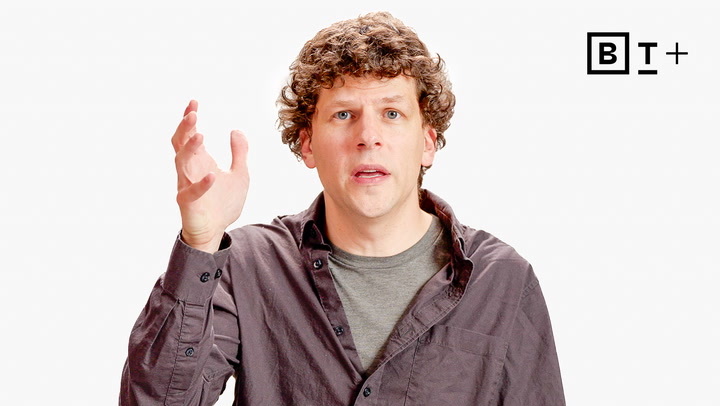
In a stormy situation, Jesse Eisenberg emphasizes that effective leadership involves seeking solutions, fostering collaboration, and balancing confidence with vulnerability to motivate your team and navigate challenges together.