Skip to content

Oops! That page can’t be found.

It looks like nothing was found at this location. Maybe try a search?


Were you looking for something like this?
In this video lesson, psychologist Daniel Goleman discusses social awareness—an essential aspect of emotional intelligence that involves understanding others’ emotions and perspectives—and offers practical strategies to enhance empathy and improve communication skills.
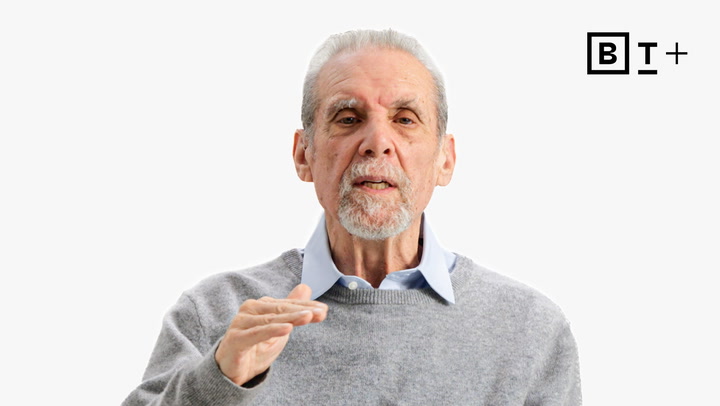
Viktor Frankl’s insight on the space between stimulus and response highlights the importance of self-management in emotional intelligence, which psychologist Daniel Goleman emphasizes as crucial for leaders to foster effective, high-performing teams by mastering emotional balance, positive outlook, adaptability, and achievement orientation.
Psychologist Daniel Goleman emphasizes that self-awareness, akin to a car’s speedometer, is crucial for understanding our emotions and improving emotional intelligence, and he offers mindfulness strategies to enhance this vital skill for personal and professional growth.
Psychologist Daniel Goleman defines the “optimal state” as a mental sweet spot of effortless concentration and enjoyment, achieved through emotional intelligence, which enhances engagement, satisfaction, and performance in tasks.
Psychologist Daniel Goleman refers to the “optimal state” of peak performance, where tasks flow effortlessly and accomplishment fuels energy, and emphasizes that it can be achieved through mindfulness, focus, and emotional intelligence at individual, team, and organizational levels.
Forbes highlights that companies with strong cultures can achieve 4x revenue growth, and Executive Advisor Tiffani Bova emphasizes that trusted leadership, cross-functional collaboration, and diversity of thought are essential for fostering an engaging work environment that benefits both employees and customers.
As AI integration in the workplace raises concerns about job displacement, Executive Advisor Tiffani Bova emphasizes the importance of embracing technology through reskilling, efficient processes, and employee involvement to enhance productivity and creativity.
When employers seek feedback on work satisfaction but fail to act on it, they risk damaging trust and worsening job satisfaction, highlighting the importance of integrating employee experience (EX) and customer experience (CX) metrics to address critical pain points effectively.
Shep Hyken’s motto emphasizes treating employees as internal customers, a sentiment echoed by Tiffani Bova, who argues that employee satisfaction directly impacts customer experience and organizational growth, highlighting the need to address employee disengagement and burnout.
James Cash Penney emphasized that courteous treatment leads to customer loyalty, but Tiffani Bova highlights that true customer experience (CX) involves creating added value through multiple metrics, ensuring elevated experiences that encourage recommendations and retention.
Tiffani Bova emphasizes the crucial link between customer experience (CX) and employee experience (EX), arguing that fostering happy employees leads to satisfied customers, and suggests balancing their needs to drive growth and improve overall business alignment.
Gallup’s 2022 findings reveal that 50% of the workforce is “quiet quitting,” indicating widespread employee dissatisfaction, but Executive Advisor Tiffani Bova suggests that leaders can address this by treating employees as top stakeholders and prioritizing their needs for long-term success.
Tiffani Bova emphasizes that fostering employee satisfaction is crucial for enhancing customer experience, advocating for the integration of customer experience (CX) and employee experience (EX) to achieve predictable growth.
In a video lesson, restaurateur Will Guidara emphasizes that both defensive and offensive strategies are crucial for business success, advocating for small, impactful cuts during tough times and encouraging team creativity to drive innovation and revenue growth.
Leadership expert Simon Sinek emphasizes that worthy rivals inspire improvement through process-focused competition, a principle restaurateur Will Guidara applied at Eleven Madison Park, encouraging professionals to learn from competitors to foster innovation and enhance their own offerings.
Effective parenting and workplace management require balancing strict boundaries with flexibility, empowering staff to personalize customer experiences while maintaining financial discipline, as exemplified by Will Guidara’s approach of tightly managing 95% of the budget to allow for meaningful connections with the remaining 5%.
Theme parks like Disneyworld enhance guest experiences through pattern recognition and creative responses, such as personalizing interactions with buttons and alleviating wait times with entertainment, as explained by restaurateur Will Guidara in his video lesson on tailored hospitality.
Restauranteur Will Guidara emphasizes the importance of “one size fits one” hospitality, encouraging businesses to embrace individual uniqueness by creating tailored experiences that foster meaningful relationships and elevate customer satisfaction through intentional service.
Engaging in “unreasonable hospitality,” as defined by restaurateur Will Guidara, can be your strongest competitive advantage in sales by making customers feel valued, and it can be creatively and systematically implemented without being exhausting.
In a video lesson, restaurateur Will Guidara emphasizes that prioritizing relationships alongside products and empowering employees to make customers feel valued can give businesses a significant competitive edge in the hospitality industry.
Asking colleagues or mentors for advice not only boosts their ego but also enhances your own perceived competence, as research shows that those who seek guidance are viewed as more intelligent and capable.
In a video lesson, marketing professor Jonah Berger explains the strategic use of personal pronouns like “I” and “you” in communication to enhance engagement and clarity, while also advising against filler words that can undermine confidence and impact.
Marketing professor Jonah Berger explains how to deflect uncomfortable questions by redirecting the conversation, using strategic responses to shift focus and make it easier for the other person to engage, similar to how Wonder Woman deflects bullets with her wrist cuffs.
Marketing professor Jonah Berger emphasizes that while concrete language enhances customer satisfaction and engagement by specifying actions, abstract language can be effective in conveying broader concepts and appealing to a larger market perspective.
Marketing professor Jonah Berger explains that expressing confidence, rather than hedging with uncertainty, enhances persuasion, as people are more likely to follow those who assertively communicate their ideas, while also advising when to appropriately express uncertainty.
Marketing professor Jonah Berger explains that using identity-based language, like calling someone a “runner” or “voter,” rather than action-based terms can significantly influence behavior and encourage individuals to adopt desired traits and actions.
In this video lesson, marketing professor Jonah Berger explains that effective storytelling hinges on emotional engagement, particularly through relatable failures and uncertainty, which keep audiences invested and eager to discover what happens next.
Dale Carnegie emphasizes that people resist being told what to do, so marketing professor Jonah Berger suggests using questions instead to foster openness, encourage commitment, and demonstrate genuine interest in others’ perspectives for more effective persuasion.
Marketing professor Jonah Berger explains that employees often adopt the linguistic norms of their peers, which can predict retention and success in the workplace, suggesting that using similar language fosters connections and enhances organizational fit.