Alan Alda emphasizes that empathy, while a vital communication tool, requires practice to maintain; he suggests exercises that enhance social perception and emotional awareness to keep one’s “empathy thermometer” active and prevent emotional overwhelm.
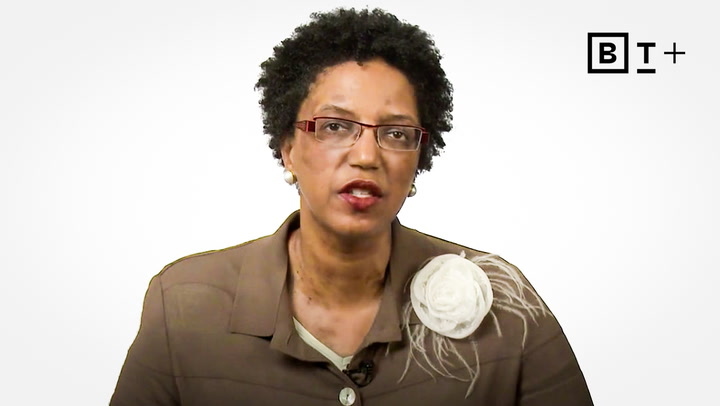
Effective leadership in today’s dynamic economy involves creating a supportive culture that unlocks team talents, defines clear goals, and adapts to daily realities, as outlined by Linda Hill in her video lesson on fostering performance, adaptability, and employee satisfaction.
Today’s leadership relies on building trust and inspiring commitment rather than exerting formal authority, emphasizing the importance of character and competence in fostering strong relationships with direct reports, especially in complex and interdependent environments.
Research by Adam Grant reveals that ambiverts, who balance introverted and extroverted traits, excel in sales by being attuned to others’ needs, outperforming both extroverts and introverts, making them the most effective sellers.
In a world filled with distractions, success hinges on your ability to connect, making sales skills essential for everyone, as emphasized by author Daniel Pink.
Sheila Heen explains that our emotional baseline significantly influences how we perceive and respond to feedback, highlighting the importance of understanding our emotional profiles to effectively utilize feedback in personal growth.
In her video lesson, Sheila Heen emphasizes that improving interpersonal relationships starts with self-reflection, offering tools to identify reaction triggers—truth, relationship, and identity—that can help navigate feedback and enhance interactions.
Sheila Heen, a Founder and Partner at Triad Consulting Group, emphasizes that feedback should empower growth and optimal performance, rather than devolving into a contest of wills.
Michelle Tillis Lederman defines a connector as a relationship-focused individual, emphasizing that nurturing professional networks with the same intent as personal relationships can significantly enhance career development, allowing connectors to achieve their goals more efficiently.
To effectively change old habits, avoid drastic resolutions and instead practice “self-nudging” by making small adjustments to body language and mindset, fostering incremental improvements and a growth mindset for enhanced emotional well-being and resilience.
Amy Cuddy teaches that adjusting your posture can influence your thoughts and feelings, emphasizing the body-mind connection and offering kinesthetic techniques to decrease stress and boost mood by promoting powerful body language and mindful breathing.
American culture prioritizes acquisition, but Amy Cuddy emphasizes that true presence is an ongoing commitment to being emotionally and physically engaged in the moment, requiring self-affirmation and the harnessing of personal power to navigate stress and improve over time.
Amy Cuddy explains that true presence, characterized by belief in one’s story, confidence, and synchrony between verbal and non-verbal cues, contrasts with inauthenticity, which can be detected through conflicting emotions and behavioral leaks.
“Presence,” as defined by social psychologist Amy Cuddy, is the ability to express your true self under pressure, enabling peak performance by fostering self-acceptance and awareness, particularly in high-stakes situations that trigger anxiety and social judgment.
“Presence,” defined by social psychologist Amy Cuddy as being attuned to and expressing your true self, is a valuable quality that enhances professional performance when one feels ready, open, and comfortable in their own skin.
Cal Newport suggests using time blocking to enhance productivity and reduce stress by intentionally scheduling specific activities, allowing for focused work on larger tasks and flexibility for adjustments when plans change.
Cal Newport emphasizes that while frequent email and social media checks are common, they lead to “continuous partial attention,” hindering productivity, and suggests adopting deep work strategies to enhance focus and efficiency in achieving high-quality results.
Professor Alex Edmans explains that suspending our natural reactions to information that contradicts our beliefs can help us recognize biases like confirmation bias and black-and-white thinking, ultimately allowing us to avoid misinformation and gain a more nuanced understanding of reality.
In response to the Suez Canal blockage in March 2021, Professor Michael Watkins emphasizes that leaders can enhance their strategic thinking skills—through pattern recognition, systems analysis, mental agility, structured problem-solving, visioning, and political savvy—to better navigate the complexities of global trade disruptions.
In this video lesson, Professor Michael Watkins outlines six key disciplines of strategic thinking that can benefit anyone aspiring to lead, emphasizing their role in recognizing opportunities, prioritizing actions, and mobilizing resources for career growth.
In sports and life, rushing into decisions can lead to negative outcomes, so Jon Acuff advises channeling impatience into thoughtful preparation by assessing motivations, seeking honest feedback from friends, and ensuring your character and relationships are aligned before making significant jumps.
In “Office Space,” the notion of dreading Mondays reflects a common feeling of being stuck in a job, prompting author Jon Acuff to suggest self-reflection and skill development as essential steps to regain momentum and ownership of one’s career.
Hearing your recorded voice can feel strange, much like receiving feedback on your leadership; to foster personal growth, it’s essential to gather honest insights from others, ideally with the guidance of a coach, to align your intentions with your impact.
Effective leadership requires understanding your default style and knowing when to adapt, which involves courageous self-examination of your communication, conflict resolution, feedback methods, control tendencies, stress responses, and decision-making processes, according to executive coach Alisa Cohn.
Executive coach Alisa Cohn highlights that even seasoned leaders experience imposter syndrome, and to foster confidence in their teams, they must first address their own insecurities and create a psychologically safe environment.
Unconscious biases, shaped by our backgrounds and experiences, can be managed by recognizing personal and situational triggers, practicing self-awareness, engaging in difficult conversations, articulating hiring decisions, and employing cluster hiring to promote diversity in the workplace.
To enhance emotional well-being, positive psychologist Tal Ben-Shahar suggests practicing gratitude regularly, accepting painful emotions, cultivating appreciation, and reflecting on daily accomplishments, rather than limiting expressions of thanks to just once a year.
Positive psychologist Tal Ben-Shahar argues that viewing work merely as an obligation limits fulfillment, but by identifying meaningful aspects of your job, you can transform it into a calling, enhancing your spiritual well-being and overall happiness.
In his Big Think+ expert class, positive psychologist Tal Ben-Shahar addresses the “happiness paradox,” suggesting that instead of avoiding hardship, embracing it can lead to greater happiness through the SPIRE model, fostering an “antifragile” mindset.
Positive psychologist Tal Ben-Shahar argues that while resilience is valuable, developing antifragility through the SPIRE model—focusing on Spiritual, Physical, Intellectual, Relational, and Emotional well-being—is even more beneficial for achieving happiness.