Skip to content


In a video lesson, Neil Irwin emphasizes that while data is the 21st century’s currency, mastering its interpretation and application can enhance both individual and organizational success, urging professionals to leverage data wisely for career development.
In addressing issues like an ant infestation, it’s crucial to not only tackle the immediate problem but also investigate underlying causes, as political scientist Ian Bremmer suggests, to avoid being misled by recency and headline biases in understanding complex events.
In a lesson by Ian Bremmer, he emphasizes the importance of recognizing paradigm shifts in our work lives, encouraging us to challenge traditional mental models and engage with diverse perspectives, particularly as the digital world increasingly influences international relations and everyday interactions.
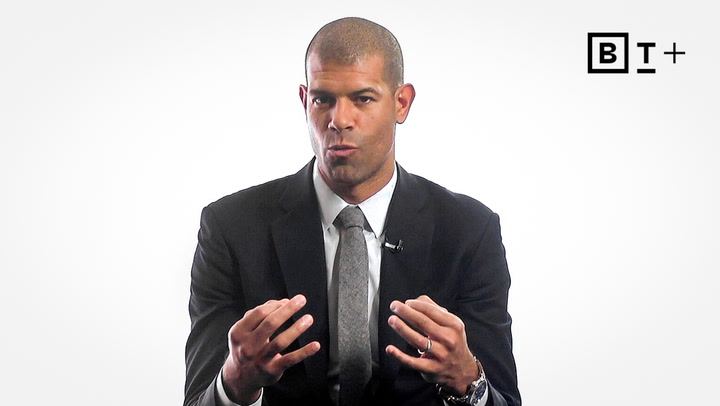
In this lesson, two-time NBA champion Shane Battier discusses how advanced basketball analytics shaped his game strategy, emphasizing the importance of understanding performance metrics and time allocation for gaining a competitive advantage, applicable across various professions.
Machine-learning consultant Eric King cautions against exaggerating AI’s capabilities, while predictive AI expert Eric Siegel emphasizes that successful AI pitches should prioritize concrete business value, focus on deployment goals, and engage stakeholders through impactful demonstrations rather than just technology details.
Generative AI tools like ChatGPT are currently in a boom phase, but predictive analytics expert Eric Siegel warns that mismanaged expectations could lead to another “AI winter,” emphasizing the need for healthy skepticism and a focus on concrete value in AI projects.
Predictive analytics expert Eric Siegel highlights that algorithms, often trained on flawed human data, can perpetuate biases, influencing critical decisions like resource access, and emphasizes the need for awareness and responsible practices to mitigate these social justice risks.
The quote “There are lies, damn lies, and statistics” highlights how data manipulation can mislead, particularly in machine learning, where predictive expert Eric Siegel argues that “lift” is a more effective metric than accuracy for evaluating model performance.
Predictive analytics expert Eric Siegel emphasizes that successful machine learning projects require a strong foundation in business goals and collaboration between data scientists and stakeholders, advocating for his bizML framework to ensure effective deployment and continuous model improvement.
Predictive analytics expert Eric Siegel emphasizes that successful machine learning projects require alignment between business stakeholders and data scientists, urging both sides to bridge their knowledge gaps to enhance project deployment and operational improvements.
Machine learning, a branch of artificial intelligence, transforms raw data into predictive models that drive business decisions, exemplified by UPS’s use of predictive analytics to optimize delivery routes, saving $350 million annually and reducing emissions.
Generative AI is impressive but overhyped, as experts like Eric Siegel argue that its tendency to hallucinate makes predictive AI a more reliable choice for automating large-scale operations.
Ferris Bueller’s advice to pause and observe life is more relevant than ever in our fast-paced digital age, where Amy Herman emphasizes the importance of not only reflection but also enhancing our perception skills.
In fast-paced business settings, Professor Alex Edmans advises on critically evaluating preliminary research findings to avoid misinformation, emphasizing the importance of author credentials and the scientific consensus over individual studies.
In a lesson inspired by The Wizard of Oz, Professor Alex Edmans emphasizes the importance of critically evaluating authors’ expertise and potential biases to uncover their true intentions and credibility in research.
In this lesson, Professor Alex Edmans emphasizes the importance of context in evaluating evidence, illustrating that findings applicable in one setting, like productivity methods, may not universally translate to different environments, such as education.
Professor Alex Edmans emphasizes that while data can reveal correlations, it does not equate to evidence, as true evidence must point to specific conclusions, highlighting the importance of distinguishing between correlation and causation in data interpretation.
Professor Alex Edmans emphasizes the importance of critical thinking in evaluating data, warning against biased sampling and cherry-picked information, as illustrated by a marketing strategy report that only considered six companies, potentially misrepresenting broader outcomes.
In a video lesson, Professor Alex Edmans highlights how our tendency to trust authority figures can lead to misconceptions about famous quotes, emphasizing the importance of scrutinizing context and evidence to avoid accepting potentially misleading statements as truth.
Professor Alex Edmans explains that suspending our natural reactions to information that contradicts our beliefs can help us recognize biases like confirmation bias and black-and-white thinking, ultimately allowing us to avoid misinformation and gain a more nuanced understanding of reality.
When employers seek feedback on work satisfaction but fail to act on it, they risk damaging trust and worsening job satisfaction, highlighting the importance of integrating employee experience (EX) and customer experience (CX) metrics to address critical pain points effectively.
James Cash Penney emphasized that courteous treatment leads to customer loyalty, but Tiffani Bova highlights that true customer experience (CX) involves creating added value through multiple metrics, ensuring elevated experiences that encourage recommendations and retention.
Brands like Apple, Disney, and Nike achieved their iconic status through innovation and strategic focus on emotional connections, as discussed by entrepreneur Gary Vaynerchuk, who emphasizes the importance of patience and long-term thinking in building brand recognition and measuring its ROI.