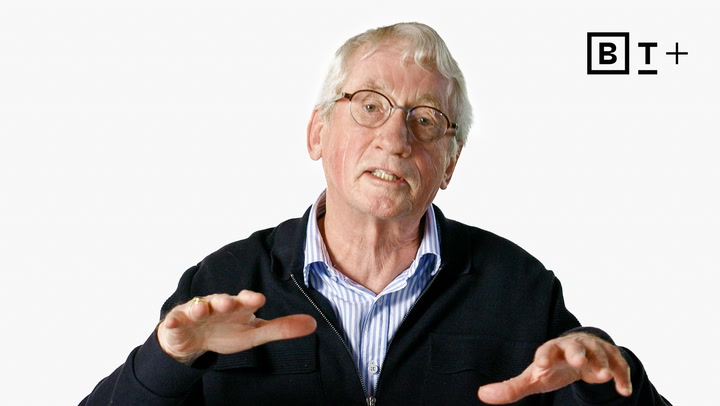
Primatologist Frans de Waal explains that the term “alpha male,” often misunderstood in popular culture, refers to a leader in social hierarchies, characterized by empathy and support, rather than personality type, with both alpha males and females deriving power from social relationships and group dynamics.
Oops! That page can’t be found.
It looks like nothing was found at this location. Maybe try a search?
Were you looking for something like this?
In a video lesson, primatologist Frans de Waal explores the similarities between humans and our closest ape relatives, highlighting how both biology and culture shape our understanding of sex and gender, while emphasizing the flexibility of human behavior beyond natural tendencies.
In a lesson on leadership, primatologist Frans de Waal argues that true alpha males, exemplified by a classmate helping a bullied child, demonstrate empathy rather than aggression, a trait he believes is essential for effective leadership in both social and corporate environments.
Primatologist Frans de Waal argues that studying chimpanzees and bonobos not only fascinates but also provides valuable insights into human behavior, particularly in areas like leadership, emotions, and gender, which are essential to our identity and societal functioning.
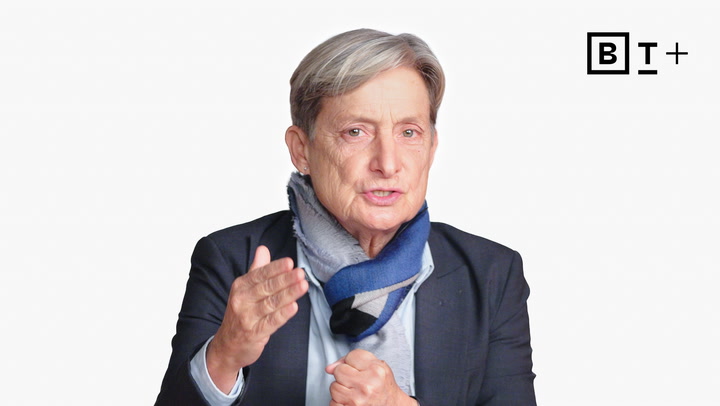
Philosopher Judith Butler argues that public mourning for individuals like George Floyd and Mahsa Amini can serve as a catalyst for social justice, emphasizing the importance of acknowledging loss, whether personal or impersonal, to challenge societal perceptions of who is deemed “grievable.”
In her video lesson, philosopher Judith Butler emphasizes the interconnectedness of our actions and urges a shift from individualism to solidarity, highlighting how our interdependence shapes our relationships with each other and the world around us.
The term “democracy,” derived from Greek meaning “rule by the people,” encompasses evolving principles of freedom, equality, and justice, as discussed by Judith Butler, who emphasizes the necessity of challenging societal norms to foster progress and redefine these ideals over time.
Philosopher Judith Butler emphasizes the importance of adopting a growth mindset to understand and accept diverse gender identities, encouraging patience and active listening to navigate the complexities of individual experiences that may challenge our fixed assumptions.
Emma Watson advocates for viewing gender as a spectrum rather than a binary, a perspective supported by Judith Butler’s theory, which emphasizes the fluidity of gender identity shaped by societal norms, cultural influences, and historical contexts.
In her video lesson, philosopher Judith Butler emphasizes that productive civil discourse requires understanding opposing views rather than shutting them down, advocating for respectful conversations that enhance mutual understanding, even when faced with disturbing ideas.
Philosopher Judith Butler argues that true wisdom lies in recognizing the limits of one’s knowledge and embracing humility, emphasizing that philosophy involves questioning our beliefs and understanding diverse perspectives on life’s fundamental issues.
In this class, Judith Butler examines how philosophical principles foster wisdom and civil discourse, providing transformative frameworks for addressing life’s complex questions, including interdependency, gender, and grief, which can enhance communication and tackle challenges in the workplace and beyond.
This video lesson examines how cultural gender norms shape identity, questioning whether a girl who prefers dinosaurs or a boy who likes pink can still embrace their gender, as philosopher Judith Butler argues that gender identity transcends biological sex.
In this video lesson, Chris Voss emphasizes that slowing down negotiations can lead to better outcomes by fostering effective communication, strategic concessions, and relationship-building, ultimately avoiding unproductive conversations and costly mistakes.
To gain the upper hand in negotiations without threatening the other party, use questions starting with “What” or “How” to create the illusion of their control, fostering empathy and clarity while establishing your limits gradually.
In negotiation, tone of voice significantly influences collaboration and outcomes, with expert Chris Voss highlighting techniques like mirroring and inflection, while emphasizing the critical role of the concept of “fairness” as both a strategic tool and a potential pitfall.
Successful negotiation focuses on collaboration for mutual benefit rather than simply achieving “yes,” with FBI negotiator Chris Voss advocating for starting with “no” to foster trust and open communication, ultimately leading to a more productive dialogue.
In negotiations, addressing and preemptively diminishing your counterpart’s negative emotions through tactical empathy—by acknowledging their fears and labeling their concerns—can shift focus from potential losses to positive outcomes, as explained by Chris Voss.
Negotiation styles—assertive, accommodating, and analytical—reflect our tendencies, and successful negotiators like Chris Voss advocate for blending these approaches to enhance interactions and outcomes, emphasizing the importance of tone and foresight in achieving mastery.
High-level negotiators, like former FBI agent Chris Voss, view negotiation as a science governed by consistent rules that anyone can learn to enhance their chances of achieving better deals, despite the inherent unpredictability of outcomes.
Gustave Flaubert’s quest for the “mot juste” highlights the importance of word choice, but Alan Alda emphasizes that effective communication relies on empathy and connection, achieved through understanding, eye contact, and mirroring the listener’s emotions.
Writing requires empathy and skillful sentence structure to engage readers effectively, similar to face-to-face communication, by clearly presenting the subject and action while teaching something new at the end for clarity and smoothness.
Alan Alda’s three communication rules emphasize connecting with your audience, explaining ideas from multiple angles, and reinforcing key points, highlighting that effective communication is a gradual process rather than just memorizing tips.
To engage your audience, humanize your message by sharing personal struggles and obstacles faced in achieving your goals, as this narrative resonates more than technical details alone.
Jargon can obscure communication and create barriers, but by humanizing it and simplifying language, we foster better connections and understanding, as emphasized by Alan Alda in his lesson on effective communication.
Improvisational comedy teaches that effective workplace collaboration hinges on active listening and engagement, encouraging a “yes, and” mindset that fosters open-mindedness and connection, ultimately enhancing communication and career success.
Alan Alda emphasizes that empathy, while a vital communication tool, requires practice to maintain; he suggests exercises that enhance social perception and emotional awareness to keep one’s “empathy thermometer” active and prevent emotional overwhelm.
In a competitive American professional culture that often prioritizes ambition over empathy, the skill of empathetic listening is crucial for effective communication, fostering genuine connections, and ensuring that your message resonates with your audience.
Alan Alda emphasizes that empathetic communication, rooted in understanding the listener’s perspective and passions, fosters mutual understanding and shared purpose, ultimately leading to stronger, lasting relationships.
Managers can maintain friendships with their team but must establish clear boundaries to avoid favoritism, ensure fair treatment, and prioritize professional responsibilities, particularly when providing feedback or navigating sensitive situations.