Skip to content


In elite sports, true greatness stems from enduring the monotony of basic drills and overcoming frustration, as highlighted by former NBA player John Amaechi, who emphasizes that mastery requires focused effort and well-executed practice rather than just flashy performances.
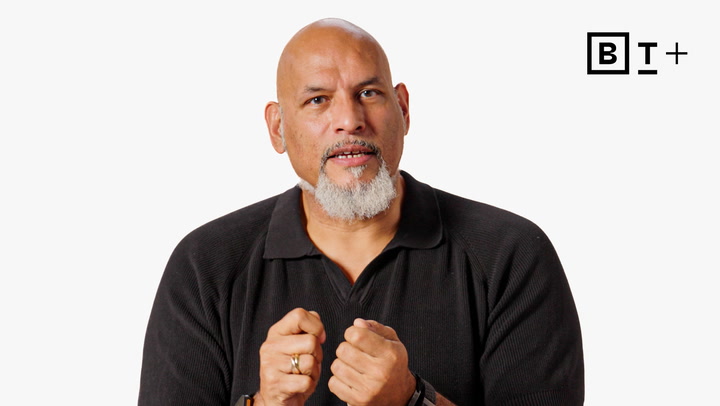
Psychologist John Amaechi emphasizes that high performers excel not due to innate talent, but through the relentless pursuit of four key drivers: knowledge, skills, opportunity, and motivation, which can be cultivated to enhance personal performance.
Psychologist John Amaechi encourages us to envision a bold future, similar to the imaginative technologies of Star Trek, and to reverse-engineer our goals by identifying necessary steps and skills to achieve that vision.
NBA players, doctoral students, and high-level leaders share the mastery of discipline in showing up for challenging, monotonous work, as highlighted by psychologist and former NBA player John Amaechi, who emphasizes that excellence stems from enduring unglamorous moments.
Introverts can thrive in the extroverted business world by embracing their strengths, pushing themselves to engage in meetings and networking, and gradually challenging their social comfort zones to succeed without compromising their natural tendencies.
In a professional landscape that often neglects women’s advocacy, Gretchen Carlson emphasizes the importance of having a proactive plan against workplace sexual harassment, which includes documenting incidents, consulting a lawyer, gathering witnesses, and understanding state laws on recording.
In this video lesson, Professor Michael Watkins emphasizes the importance of understanding organizational culture and politics through observation and inquiry, advising new employees to ask questions, conduct interviews, and seek external insights to adapt quickly to their new roles.
Before starting a new role, take time to prepare by visualizing success, understanding the organization’s culture, and identifying key relationships, as this groundwork will help you build momentum and credibility for a successful transition.
Sabermetrics has transformed sports analytics, exemplified by Shane Battier’s use of data to exploit Kobe Bryant’s weaknesses, highlighting the importance of data-driven decision-making to identify and capitalize on competitors’ vulnerabilities while balancing intuition and qualitative assessments.
In this lesson, Julia Galef explains “The Planning Fallacy,” the tendency to underestimate task duration due to overconfidence, and offers strategies to plan more realistically by acknowledging that most tasks will take longer than expected.
To enhance your relationships and productivity, take a week to evaluate how you spend your time by distinguishing between urgent and important tasks, allowing you to prioritize meaningful goals and commitments over unnecessary busyness.
Habit expert Gretchen Rubin emphasizes that forming new habits can be easier by making foundational lifestyle choices—such as healthy eating, adequate sleep, regular exercise, and decluttering—that enhance self-command and create optimal conditions for habit formation.
Conscious intention in practice, especially through pre-visualization of success and relaxation techniques, is essential for excelling in high-stakes situations, as explained by Scott Parazynski in this video lesson.
Former astronaut Chris Hadfield emphasizes that stress often stems from a lack of readiness, advocating for proactive preparation and competence as essential strategies to effectively manage challenges and reduce anxiety.
To make better decisions, embrace probabilistic thinking by evaluating multiple future possibilities and outcomes, balancing your focus on both successes and failures to develop a more accurate understanding of potential results.
In a world filled with distractions, Charles Duhigg’s video lesson emphasizes the importance of mental modeling to enhance focus and prioritize what truly matters, helping you defend your attention and prepare for daily challenges.
Charles Duhigg suggests improving productivity by prioritizing a “stretch goal” at the top of your To-Do list, followed by “SMART goals” that break down your big ambition into manageable tasks, avoiding the pitfalls of mood-repairing trivial tasks.
Introverts, often drained by social interactions, can leverage their strengths in listening and approachability to network effectively, as Michelle Tillis Lederman suggests, by volunteering for roles, arriving early, and seeking assistance to foster connections comfortably.
The Industrial Revolution shaped our work habits towards constant intensity, but productivity expert Cal Newport advocates for a balanced approach that includes rest, realistic task estimates, and mindful work environments to enhance sustained productivity without burnout.
Gen Z workers are driving a focus on diversity and inclusion, yet many traditional norms persist, prompting Gorick Ng to advise new employees on how to navigate office dynamics and prioritize high-profile assignments for career advancement.
In remote work settings, “mullet outfits” reflect a blend of comfort and professionalism, and career advisor Gorick Ng emphasizes the importance of managing perceptions through clear communication and mindful presentation to ensure your hard work is recognized and respected.
Meetings, while often overlooked, are crucial for workplace productivity and career advancement; by clarifying expectations beforehand, engaging appropriately during, and following up afterward, you can effectively showcase your capabilities and build valuable relationships.
Stephen Covey’s quote emphasizes that instead of merely following your schedule, you should prioritize essential tasks, a strategy career advisor Gorick Ng elaborates on by offering tools to distinguish between urgent and important tasks for a more effective workday.
In chess, players think three moves ahead, a strategy applicable in the workplace where taking ownership of your role, proactively addressing team needs, and understanding the RACI matrix can enhance performance and contribute to organizational goals.
Career advisor Gorick Ng shares four strategies to ease first-day jitters at a new job: research your workplace, build relationships early, volunteer to help, and actively ask questions to engage and learn.
In this video lesson, career advisor Gorick Ng explains how understanding unspoken workplace expectations—such as competence, commitment, and compatibility—can help newcomers navigate interpersonal dynamics, build trust, and unlock career opportunities.
In sports and life, rushing into decisions can lead to negative outcomes, so Jon Acuff advises channeling impatience into thoughtful preparation by assessing motivations, seeking honest feedback from friends, and ensuring your character and relationships are aligned before making significant jumps.