AI can enhance creativity by helping you achieve your goals faster, but success depends on effectively framing your prompts, defining your purpose, setting clear parameters, and iterating on the output, as explained by AI storyteller Willonius Hatcher.
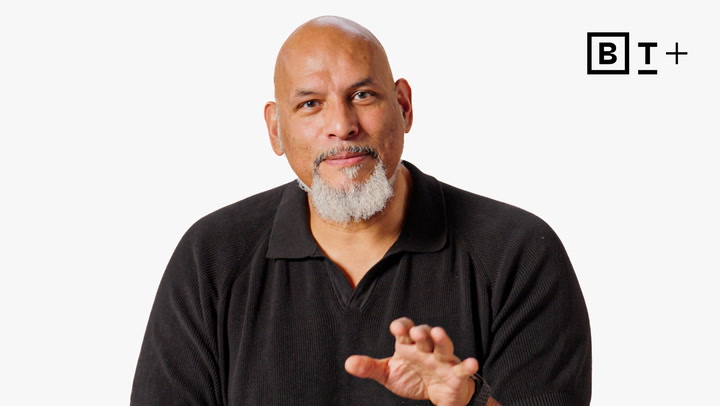
In elite sports, true greatness stems from enduring the monotony of basic drills and overcoming frustration, as highlighted by former NBA player John Amaechi, who emphasizes that mastery requires focused effort and well-executed practice rather than just flashy performances.
Psychologist John Amaechi emphasizes that high performers excel not due to innate talent, but through the relentless pursuit of four key drivers: knowledge, skills, opportunity, and motivation, which can be cultivated to enhance personal performance.
Psychologist John Amaechi emphasizes that, like Luke Skywalker, real-world success relies on building a supportive network—your own Rebel Alliance—of people who share your vision and help you stay focused and motivated through challenges.
Introverts can thrive in the extroverted business world by embracing their strengths, pushing themselves to engage in meetings and networking, and gradually challenging their social comfort zones to succeed without compromising their natural tendencies.
Visionary change requires resilience and persistence, as true changemakers embrace risks, communicate their vision, reframe rejection, and use disappointment as motivation to refine their ideas and foster innovation within their teams.
NBA champion Shane Battier embodies Carol Dweck’s growth mindset theory, believing that talent is merely a starting point, and emphasizes that dedication and hard work foster resilience and passion for learning, as he overcame physical limitations throughout his career.
Former NBA player Shane Battier, dubbed “the no stat all-star,” emphasizes that being a valuable team player, rather than focusing solely on statistics, is essential for team success and can lead to recognition and significant rewards.
Shane Battier emphasizes that success, whether in basketball or any organization, hinges on embracing the unique skills of each team member, balancing aggressive offensive strategies with steadfast defensive approaches, and clearly defining roles to optimize performance.
Shane Battier emphasizes the importance of goal setting, habit formation, and a winning mindset in personal productivity, drawing from his NBA journey to illustrate how these principles can enhance individual and team performance.
Habits can have a dark side, but according to Gretchen Rubin, self-compassion during setbacks is key to overcoming bad habits, as understanding the tension between your present and future selves can help you align with your true values and learn from mistakes.
Mindfulness practice aims to cultivate frequent moments of awareness throughout the day, helping us reconnect with our values and priorities, and Rasmus Hougaard offers strategies for integrating mindfulness into daily life through various methods, including apps, books, and community support.
Salespeople often face negative stereotypes, but Bill McDermott, CEO of ServiceNow, emphasizes that selling with passion and empathy, learned from his Xerox days, is far more effective than hard selling, advocating for a personalized approach in sales.
Confidence, as defined by Claire Shipman, is an active trust in one’s abilities built through life experiences and challenges, rather than a static self-esteem; it empowers women to embrace opportunities and make bold decisions, countering the tendency to underestimate their capabilities.
Dan Pink emphasizes that the key to sales success lies in how we interpret failure—viewing it as impersonal, inevitable yet not all-encompassing, and temporary—while fostering resilience and seeking alternative explanations to decatastrophize setbacks.
Cal Newport emphasizes that while frequent email and social media checks are common, they lead to “continuous partial attention,” hindering productivity, and suggests adopting deep work strategies to enhance focus and efficiency in achieving high-quality results.
Jon Acuff emphasizes that to seize significant opportunities, one must excel in smaller moments leading up to them, be prepared to act boldly, and leverage relationships for support during career transitions.
While the movie Top Gun epitomizes ’80s cool, the real TOPGUN program focuses on teaching vital lessons for managing the pressures of being a fighter pilot, as shared by Commander Guy “Bus” Snodgrass in his video lesson on career strategies.
In her video lesson, Harvard researcher Amy Edmondson explains “intelligent failure” as a strategic approach to failure that fosters learning and discovery, emphasizing the importance of assessing risks and experimenting thoughtfully to minimize potential consequences.
In her video lesson, Harvard researcher Amy Edmondson discusses the various archetypes of failure—intelligent, basic, and complex—highlighting how embracing and learning from mistakes can lead to innovation and improvement.
Harvard researcher Amy Edmondson argues that “intelligent failure” can be a productive learning experience that fosters greater success, and in this video lesson, she explores failure archetypes and the importance of assessing risks effectively.
In a video lesson, restaurateur Will Guidara emphasizes that both defensive and offensive strategies are crucial for business success, advocating for small, impactful cuts during tough times and encouraging team creativity to drive innovation and revenue growth.
Kieran Behan’s journey to the 2012 Olympics exemplifies resilience in the face of adversity, a theme echoed by Ginni Rometty, who emphasizes the importance of relationships and a positive attitude in overcoming life’s challenges.
Debbie Millman emphasizes that courage is essential for building confidence and resilience, arguing that true bravery lies in overcoming fear and taking risks, as regret from inaction is far more detrimental than the potential for failure.
Flow is an optimized state of performance achieved through a four-part cycle—struggle, release, flow, and recovery—where understanding and managing each phase, particularly struggle and recovery, enhances your ability to access flow more frequently.