Skip to content


Venture capitalist Ben Horowitz emphasizes that a company’s culture is shaped by specific, consistently practiced behaviors rather than abstract values, advocating for clear actions—like acknowledging customer inquiries promptly—to reinforce desired cultural traits.
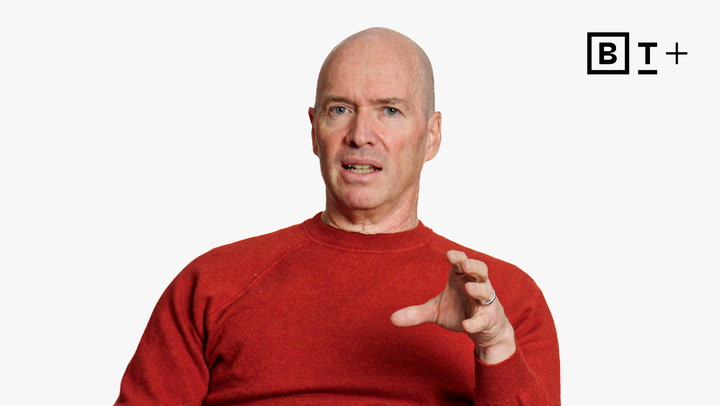
Venture capitalist Ben Horowitz warns that neglecting tough decisions, akin to ignoring a small leak, leads to “management debt” that compounds organizational issues, resulting in dissatisfied employees and ineffective teams, while effective leaders confront problems directly to prevent long-term dysfunction.
Psychologists highlight the “bystander effect,” where witnessing a problem reduces individual action, but executive coach Kim Scott offers five strategies—disrupt, delay, distract, delegate, and document—to encourage proactive support and transform bystanders into upstanders in challenging situations.
In a video lesson, executive coach Kim Scott emphasizes that radical respect—valuing individuals for their inherent worth rather than just their accomplishments—is foundational for fostering deeper collaboration and stronger performance within teams.
First-wave feminism focused on minimizing gender differences, but current research highlights that gender-diverse teams, leveraging unique strengths of women—such as emotional intelligence and holistic thinking—outperform homogeneous groups by mitigating blind spots in decision-making.
To cultivate a culture of innovation, organizations should establish a dedicated “growth board” that acts like an in-house venture capital team, evaluating new ideas against strategic priorities and fostering collaboration across departments to drive change and ownership among all employees.
To combat workplace sexual harassment, companies must prioritize elevating women into leadership roles, fostering a culture of accountability, ensuring safe reporting mechanisms, and providing comprehensive in-person training that empowers bystanders to act against misconduct.
Diversity enhances creativity and innovation in organizations, but tokenism undermines this potential; instead, companies should focus on integrating underrepresented employees based on their strengths, fostering belonging, and creating environments where diverse voices can thrive and contribute meaningfully.
To effectively develop and scale ideas in a digital world, leaders should shift from “my idea” to “the idea” thinking by creating collaborative virtual spaces for sharing and discussing projects, thereby distributing ownership and empowering their workforce.
To reinvent management, we must shift from Taylorism’s focus on individual, repetitive tasks to a model that fosters collaboration, creativity, and ownership of complex problems, leveraging diverse skill sets and technology to drive innovation.
Remote teams can be as effective as in-office ones when managed well, offering unique benefits that include improved communication, trust, and agility, but require intentional strategies to overcome physical, operational, and affinity distances.
Erica Dhawan outlines five traits—curiosity, combination, courage, community, and combustion—that enhance connectional intelligence (CxQ) to foster innovation, illustrated by Colgate-Palmolive’s successful problem-solving approach with a new fluoride toothpaste.
Collaboration consultant Erica Dhawan argues that while IQ and emotional intelligence were once prioritized, connectional intelligence (CxQ) is now essential for achieving success in the 21st century.
Successful teams, much like jazz ensembles, thrive on fluidity and adaptability, embracing mistakes as opportunities for growth while fostering a culture of improvisation and collaboration to navigate constantly changing environments.
Ecosystems, like teams, are sensitive to change; new leaders must strategically manage roles and relationships to ensure balance, reengage disappointed team members, and recalibrate dynamics to effectively guide their teams toward shared goals.
In a video lesson, Professor Michael Watkins emphasizes that new leaders should take time to understand an organization’s culture and needs before implementing changes, as moving too quickly can lead to rejection and resistance from employees.
In this video lesson, Professor Michael Watkins emphasizes the importance of understanding organizational culture and politics through observation and inquiry, advising new employees to ask questions, conduct interviews, and seek external insights to adapt quickly to their new roles.
To thrive in a new leadership role, Michael Watkins advises understanding the organization’s culture and assessing its needs, which will help you adapt your leadership style and gain support from superiors and team members.
Restaurateur Will Guidara emphasizes the importance of a meticulous hiring process, advising that taking time to find the right fit can prevent costly missteps that disrupt team dynamics and values.
Restaurateur Will Guidara advocates for a team culture in hospitality where asking for help is normalized, emphasizing self-care and support through practices like identifying what fills team members’ “pitchers” and destigmatizing help requests with subtle cues.
Restaurateur Will Guidara emphasizes the importance of balancing praise and constructive criticism to cultivate a culture of growth and excellence, sharing five essential rules for providing and receiving feedback effectively.
Will Guidara emphasizes the importance of articulating core values through collaborative language, as demonstrated by Eleven Madison Park’s staff, who identified four key values—hospitality, excellence, education, and passion—to shape a cohesive organizational culture.
Restaurateur Will Guidara emphasizes that extending hospitality to employees, alongside customers, fosters a culture of shared values and purposeful communication, ultimately enabling staff to feel valued and perform at their best.
Kenji Yoshino’s research highlights the inadequacy of many diversity initiatives since the 1960s, proposing a three-step framework—diagnose, analyze, and act—to effectively address identity covering in workplaces and foster genuine inclusion.
Kenji Yoshino’s research highlights the gap between organizations’ stated and lived inclusion values, urging leaders to engage in meaningful dialogue with employees to align practices with core values and address any discrepancies.
Kenji Yoshino discusses Robert Putnam’s bonding and bridging capital, emphasizing that while bonding capital unites individuals within groups, bridging capital fosters connections across diverse groups, advocating for combined bonding and bridging activities to prevent isolation in organizations.
Kenji Yoshino’s research highlights that covering demands from leaders significantly diminish employee commitment and engagement, emphasizing the need for leaders to actively support diversity initiatives to fully harness their workforce’s talents.
As workplaces evolve into total institutions that demand more of individuals, leaders must prioritize authenticity and support human flourishing, as 61% of employees report covering, which significantly harms their sense of self.
In her lesson, Salzberg emphasizes fostering organizational meaning through individual and institutional commitments to compassion, self-care, and resilience, while highlighting the importance of balance to prevent collective burnout.
NASA exemplifies innovation under pressure through “situationally appropriate leadership,” where diverse, empowered individuals on the frontlines lead problem-solving efforts, fostering adaptability and efficiency while enhancing talent retention and collaboration.