Skip to content


Effective communication often falters due to misunderstandings of intellectual diversity, but by recognizing different attention triggers and adjusting your approach—such as using clear subject lines, summarizing key points, or asking guiding questions—you can transform potential breakdowns into breakthroughs.
Effective communication often falters not due to clarity or attention but because of inherent differences in how individuals process information, termed “mind patterns,” which are crucial for enhancing connectional intelligence (CQ).
Burnout in the workplace is widespread due to a culture that pressures individuals to excel in all areas, while leveraging diverse “thinking talents”—analytic, procedural, relational, and innovative—can energize employees and help prevent burnout.
As generative AI transforms society, leaders must model responsible use by fostering collaboration, setting realistic guidelines, encouraging exploration, creating a cooperative culture, ensuring data privacy, and demonstrating effective AI practices to guide their teams.
Firing someone is challenging, but restaurateur Will Guidara emphasizes the importance of understanding an employee’s struggles before making a decision, urging leaders to assess whether the issue is a lack of effort or a mismatch in role, and to provide necessary support.
Restaurateur Will Guidara emphasizes the importance of a meticulous hiring process, advising that taking time to find the right fit can prevent costly missteps that disrupt team dynamics and values.
Restaurateur Will Guidara advocates for a team culture in hospitality where asking for help is normalized, emphasizing self-care and support through practices like identifying what fills team members’ “pitchers” and destigmatizing help requests with subtle cues.
Restaurateur Will Guidara emphasizes the importance of balancing praise and constructive criticism to cultivate a culture of growth and excellence, sharing five essential rules for providing and receiving feedback effectively.
Teachers often gain a deeper understanding of their subjects through teaching, a principle leveraged by Will Guidara at Eleven Madison Park, where mandatory staff-led training sessions encourage knowledge sharing, personal growth, and responsibility among employees.
To transform daily meetings from time-wasters into sources of inspiration and team unity, restaurateur Will Guidara suggests focusing on creativity, prioritizing meaningful discussions, and varying topics to enhance engagement and productivity.
Will Guidara emphasizes the importance of articulating core values through collaborative language, as demonstrated by Eleven Madison Park’s staff, who identified four key values—hospitality, excellence, education, and passion—to shape a cohesive organizational culture.
Restaurateur Will Guidara emphasizes that extending hospitality to employees, alongside customers, fosters a culture of shared values and purposeful communication, ultimately enabling staff to feel valued and perform at their best.
Machine-learning consultant Eric King cautions against exaggerating AI’s capabilities, while predictive AI expert Eric Siegel emphasizes that successful AI pitches should prioritize concrete business value, focus on deployment goals, and engage stakeholders through impactful demonstrations rather than just technology details.
Generative AI tools like ChatGPT are currently in a boom phase, but predictive analytics expert Eric Siegel warns that mismanaged expectations could lead to another “AI winter,” emphasizing the need for healthy skepticism and a focus on concrete value in AI projects.
Predictive analytics expert Eric Siegel highlights that algorithms, often trained on flawed human data, can perpetuate biases, influencing critical decisions like resource access, and emphasizes the need for awareness and responsible practices to mitigate these social justice risks.
Predictive analytics expert Eric Siegel emphasizes that successful machine learning projects require a strong foundation in business goals and collaboration between data scientists and stakeholders, advocating for his bizML framework to ensure effective deployment and continuous model improvement.
Predictive analytics expert Eric Siegel emphasizes that successful machine learning projects require alignment between business stakeholders and data scientists, urging both sides to bridge their knowledge gaps to enhance project deployment and operational improvements.
Machine learning, a branch of artificial intelligence, transforms raw data into predictive models that drive business decisions, exemplified by UPS’s use of predictive analytics to optimize delivery routes, saving $350 million annually and reducing emissions.
Generative AI is impressive but overhyped, as experts like Eric Siegel argue that its tendency to hallucinate makes predictive AI a more reliable choice for automating large-scale operations.
Charlene Li emphasizes the importance of strategically using social media and big data to listen to key audiences in real-time, while also cautioning against the risks of overwhelming information, and suggests focusing on trusted filters to enhance communication and innovation.
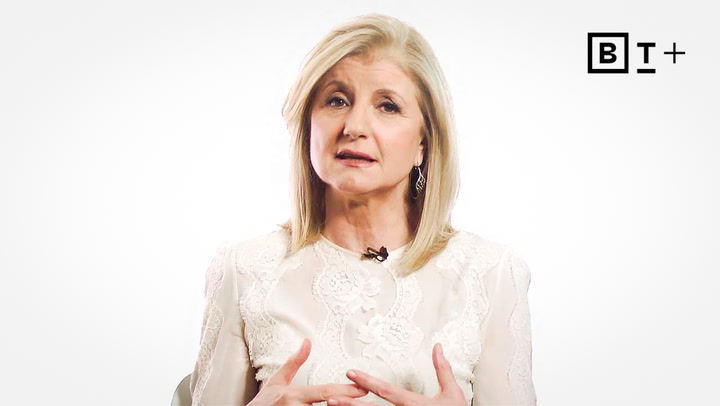
Arianna Huffington emphasizes the importance of rediscovering wonder in our lives through Presence and Storytelling, encouraging us to be present in the moment and connect with others by sharing and learning from our narratives.
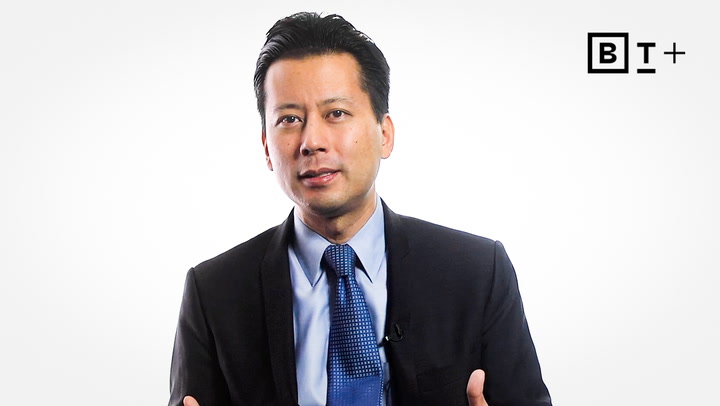
Kenji Yoshino’s research highlights the inadequacy of many diversity initiatives since the 1960s, proposing a three-step framework—diagnose, analyze, and act—to effectively address identity covering in workplaces and foster genuine inclusion.
Kenji Yoshino’s research highlights the gap between organizations’ stated and lived inclusion values, urging leaders to engage in meaningful dialogue with employees to align practices with core values and address any discrepancies.
Kenji Yoshino discusses Robert Putnam’s bonding and bridging capital, emphasizing that while bonding capital unites individuals within groups, bridging capital fosters connections across diverse groups, advocating for combined bonding and bridging activities to prevent isolation in organizations.
Kenji Yoshino’s research highlights that covering demands from leaders significantly diminish employee commitment and engagement, emphasizing the need for leaders to actively support diversity initiatives to fully harness their workforce’s talents.
Covering, the tendency to downplay stigmatized aspects of identity, affects individuals across various groups, particularly minorities, and understanding its four axes—appearance, affiliation, advocacy, and association—can enhance inclusivity and bridge-building in the workplace.
Sociologist Erving Goffman introduced “covering” in 1963 to describe efforts by individuals with stigmatized identities to downplay their stigma, a concept later expanded by Kenji Yoshino, who found that everyone, including straight white men, engages in covering, fostering solidarity through shared experiences.
As workplaces evolve into total institutions that demand more of individuals, leaders must prioritize authenticity and support human flourishing, as 61% of employees report covering, which significantly harms their sense of self.
In this lesson, Julia Galef explains “The Planning Fallacy,” the tendency to underestimate task duration due to overconfidence, and offers strategies to plan more realistically by acknowledging that most tasks will take longer than expected.
In her lesson, Salzberg emphasizes fostering organizational meaning through individual and institutional commitments to compassion, self-care, and resilience, while highlighting the importance of balance to prevent collective burnout.