Work-life balance may be a misleading concept, as true equilibrium between work and life is unattainable; instead, Bill George advocates for “work-life integration,” encouraging thoughtful trade-offs and authentic engagement in all aspects of life to avoid burnout.
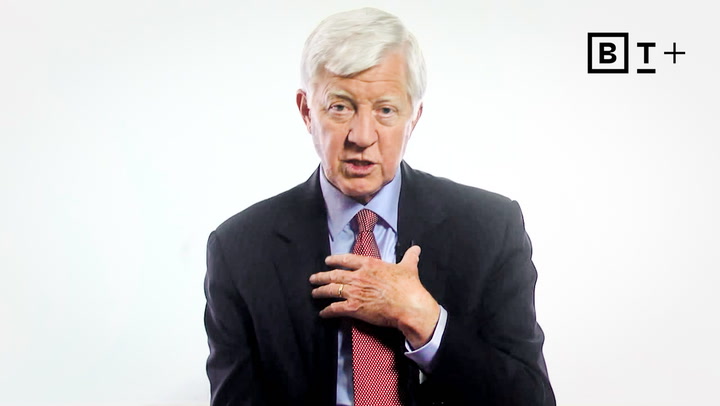
Bill George emphasizes the importance of building a support team, including a trusted confidant, mentors of all ages, and a community group, to foster balanced leadership and ensure you have support during challenging times.
Bill George, former CEO of Medtronic, emphasizes the importance of finding your “sweet spot”—the balance between your greatest motivations and capabilities—to maintain enthusiasm, enhance performance, and foster authenticity in leadership throughout your career.
Bill George emphasizes that true leadership is rooted in authenticity and emotional intelligence, advocating for a shift from individual ambition to servant leadership while encouraging self-awareness and learning from challenges to reach peak leadership potential.
In a video lesson, Simon Sinek outlines four essential laws for effective leadership, emphasizing that true leadership stems from trust, caring for others, personal engagement, and genuine human connection rather than performance metrics or social media presence.
Leaders must create a “circle of safety” by protecting employees from internal dangers like politics and toxicity, fostering an environment of trust and cooperation that allows individuals to reach their full potential and effectively address external challenges.
Personal success varies greatly among individuals, but without a clear understanding of their “why,” they risk losing direction in their pursuit of happiness and fulfillment, as emphasized by leadership consultant Simon Sinek, who advocates for purposeful decision-making in career choices.
In this video lesson, leadership consultant Simon Sinek emphasizes the importance of understanding and articulating an organization’s “why” to maintain direction and purpose, as exemplified by Disney’s return to its original vision under CEO Bob Iger.
In a video lesson, leadership consultant Simon Sinek discusses how the evolution of organizational hierarchy reflects our expectations of leaders to protect and guide their groups in exchange for certain perks, emphasizing the enduring nature of these dynamics throughout history.
Humans are instinctively drawn to hierarchy, but to earn respect, leaders must clearly communicate their motivations and demonstrate compassion and loyalty, fostering a reciprocal commitment from their teams, according to leadership consultant Simon Sinek.
Leaders can uniquely implement vision and strategy within their organizations, and art historian Amy Herman’s ADOPT ME model—Assessment, Delegation, Observation, Perception, Tolerance, Mentoring, Evaluating—helps sharpen their leadership skills and enhance team perception.
Paid parental leave benefits families and society by promoting recovery, bonding, and sleep for parents, while also strengthening economies, as evidenced by the U.S. lagging behind other nations in providing such support despite its positive impact on future generations and gender equity.
Lisa Bodell, Founder and CEO of FutureThink, teaches how to lead teams through her “Wildcards” thought experiment, which encourages agile responses to change by having small groups tackle a problem and adapt to unexpected shifts in its definition.
Lisa Bodell, CEO of FutureThink, emphasizes overcoming inertia in change management through “Little Bigs”—small exercises that encourage innovative thinking and behavior shifts, such as brainstorming risky ideas, involving outsiders in problem-solving, and empowering team members to make independent decisions.
Lisa Bodell, Founder and CEO of FutureThink, emphasizes that the key to innovation lies not in access to information but in improving our questioning skills, advocating for provocative thought experiments to elicit meaningful insights.
FutureThink CEO Lisa Bodell emphasizes that evaluating risks and clearly communicating criteria for smart versus stupid risks empowers decision-making, urging organizations to define essential information needed to pursue opportunities while establishing clear boundaries for acceptable risk.
Lisa Bodell, Founder and CEO of FutureThink, outlines effective strategies for managers to embrace and implement change, emphasizing the importance of collaboration, identifying competitive weaknesses, and fostering a culture where change is collectively supported and simplified.
FutureThink CEO Lisa Bodell outlines five essential characteristics of innovative companies—strategic imagination, smart risk-taking, resiliency, agility, and future focus—explaining how to identify and foster these traits in team building.
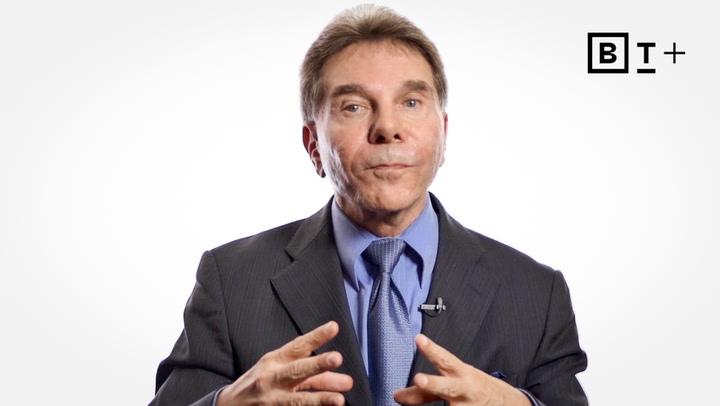
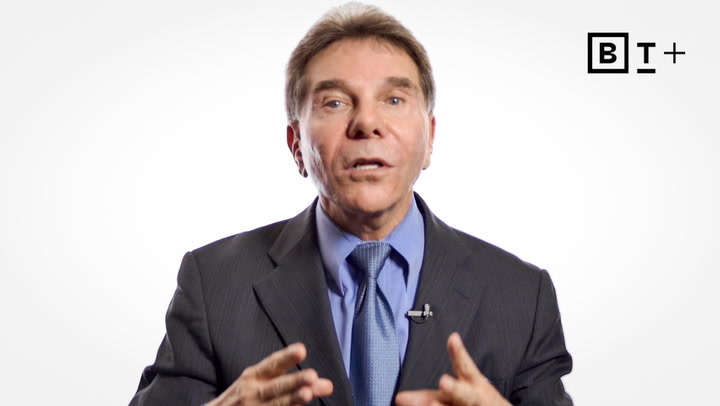
Managing people requires fostering internal motivation rather than relying on coercion, and Robert Cialdini suggests using “pre-suasive” techniques, such as congratulating teams on their commitment to future goals and encouraging creative problem-solving in expansive environments.
Robert Cialdini outlines three effective negotiation techniques: match your partner’s verbal style, pause before presenting your strongest point, and build trust by revealing a weakness before making your main argument, all of which can lead to more favorable outcomes.
Robert Cialdini emphasizes the ethical use of persuasion and pre-suasion, warning that irresponsible practices can lead to high turnover and a culture of dishonesty, while encouraging businesses to prioritize customer interests and the genuine value of their offerings.
Thoughts, feelings, and actions are influenced by unconscious factors, and “pre-suasion” involves strategically preparing audiences to be receptive to a message by using imagery or cues that align with desired behaviors, enhancing the effectiveness of persuasion.
Mindfulness in the workplace involves intentional awareness and nonjudgmental engagement, benefiting both individual well-being and organizational culture, as exemplified by companies like Aetna that prioritize employee happiness and compassionate leadership.
Google’s research revealed that team success relies not on member qualities but on psychological safety, characterized by equality in conversational turn-taking and social sensitivity, which can be fostered by leaders through inclusive practices and attentiveness to team dynamics.
Innovation thrives on audacious ambition rather than incremental steps; in his video lesson, Charles Duhigg emphasizes that starting with “stretch goals” can inspire revolutionary change by encouraging a fresh perspective on challenges.
Former CIA operative Andrew Bustamante shares how the “win or die trying” mindset can enhance leadership by fostering accountability, minimizing distractions, and promoting excellence in business through strategic decision-making and support for high performers.
Ram Dass’s insight on silence resonates with Andrew Bustamante’s emphasis on strategic secrecy in leadership, highlighting how withholding information can enhance team focus and motivation while safeguarding valuable insights for greater impact.
In this video lesson, former CIA operative Andrew Bustamante reveals how to move beyond small talk to uncover deeper insights through “elicitation,” a technique that uses open-ended questions to encourage others to share their thoughts and motivations naturally.
In this video lesson, former CIA operative Andrew Bustamante explains how strategically managing information can provide a competitive edge in the professional world, emphasizing the importance of trading secrets with a decreasing half-life to maintain influence and power.
In a video lesson, former CIA operative Andrew Bustamante explains how understanding people’s core motivators—through the RICE method—can inspire genuine action and build rapport, transforming motivation into a powerful tool for achieving results with integrity.