Artificial Intelligence Set to Predict and Reduce Pollution
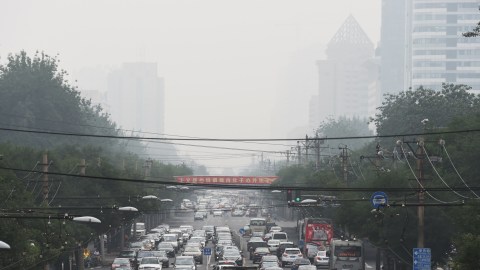
Air pollution in Beijing is bad, bad enough that the mayor of the city has been heard calling its conditions “unlivable.” If you haven’t seen the city’s pollution first-hand, it’s not difficult to find images of a thick smog shrouding the city. The burning of coal and an uptick in traffic all have their parts to play in this devastating man-made fog that has led to a cascade of detrimental effects from the health of its citizens to a drop in tourism.
The government has put some plans into action to help alleviate problem, but the air is a long way from being clear. In the mean time, researchers from IBM believe their AI can offer some assistance. They’ve developed a kind of weather broadcast system that can predict how bad the pollution in Beijing will be 72 hours in advance.
IBM researchers hope to utilize advanced machine learning to get these pollution predictions to the citizens of Beijing. The project will require an AI to sift through huge amounts of data in the hopes that it will be able to dissect meaning from it all in the form of a pollution prediction.
IBM’s system is like what Microsoft’s Stefan Weitz describes as the future of machine learning, i.e. teaching artificial intelligence to identify patterns: