 Learning & Development
Develop leaders in your organization with Big Think+ classes
Learning & Development
Develop leaders in your organization with Big Think+ classes
 Custom Content
Create premium thought leadership and storytelling with Big Think Creative
Custom Content
Create premium thought leadership and storytelling with Big Think Creative
 Advertising Campaigns
Reach the smartest audience on the Internet with Big Think editorial integrations
Advertising Campaigns
Reach the smartest audience on the Internet with Big Think editorial integrations
 Live Events
Bring your people and ideas to life with Big Think Events
Live Events
Bring your people and ideas to life with Big Think Events
This content is locked. Please login or become a member.
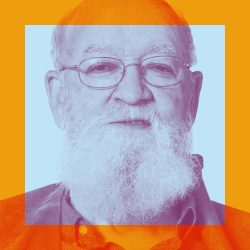
The Hurley Model of Humor
Humor is a remarkable phenomenon, and I’m amazed at how few people have stopped to ask themselves the question, why is humor a thing at all? Why is there humor? There are hundreds of books about humor written by very solemn people usually. They aren’t very funny books. But some great minds have come to grief trying to write about humor. We’re the only species, arguably, that exhibits humor. It’s a very important and beloved phenomenon. People get rich as comedians and comic writers and clowns. And people spend good money to have their funny bone tickled. Why is humor so attractive?
The Hurley Model, which I endorse, we developed it together, but it’s his model, which says it all grows out of two facts about the human brain. One is that there’s no operating system for the human brain. It’s all done by emotions. All the control, all the control signals are done by the interplay and the interaction and the competition between different emotions, including micro emotions. There’s no strict traffic cop in there as there is in a digital computer that’s making the next thing happen and the next thing.
And the other thing is that human brains are sipping from a fire hose of information. Their brains make mistakes. And there needs to be a guardian system on watch for mistakes. Lots of mistakes tend to get through that triage system. Of course sometimes you catch yourself making a mistake and it’s too late and you’re hurting or falling off a cliff or something like that. Not very humorous. The humorous ones are the things where you think, uh-oh, uh-oh, and then, oh, it’s all right. I got it. I got it. Haha. And it’s that difference between uh-oh and haha, the relief we feel when our brain catches us making a mistake and keeps it from entering into our general store of knowledge where it can do a lot of damage.
The mental hygiene on our brains that is paid for by the reward of pleasure when we catch the mistakes we make. Now sometimes it’s you. Sometimes it’s somebody slipping on a banana peel. And all humor involves the lightning-fast identification of mistakes. Think about in-jokes, in-humor. Suppose there’s a joke about oh, let’s say, evolutionary biology. If I have to tell you something in order for you to get a joke, then you won’t get the joke. All humor depends on mistake and on the joy of catching mistakes. Because it’s so emotionally powerful, it’s a great way of getting people to jump out of the system. If you can sneak up behind them and catch them with a little bit of humor, that will disarm the assumptions that they’ve been laboring under all along.