 Learning & Development
Develop leaders in your organization with Big Think+ classes
Learning & Development
Develop leaders in your organization with Big Think+ classes
 Custom Content
Create premium thought leadership and storytelling with Big Think Creative
Custom Content
Create premium thought leadership and storytelling with Big Think Creative
 Advertising Campaigns
Reach the smartest audience on the Internet with Big Think editorial integrations
Advertising Campaigns
Reach the smartest audience on the Internet with Big Think editorial integrations
 Live Events
Bring your people and ideas to life with Big Think Events
Live Events
Bring your people and ideas to life with Big Think Events
This content is locked. Please login or become a member.
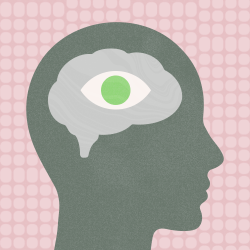
Working Memory
Your brain system that’s almost the close cousin of attention is something called working memory. Don’t get too tripped up by the term memory. For working memory, the key is the working part. It’s about maintaining and manipulating information over very short intervals, up to a minute. And we use this system all the time. So for example, think of the last time you were having a conversation with somebody and you had a great thought in the middle of this back and forth flow with them. But you’re not rude, you’re not going to just interrupt them to blurt it out; you’ll hold it in this scratch space. That involves using your working memory. The metaphor that I often use for working memory it’s that it’s the mind’s mental whiteboard. We write things temporarily on it, just like an actual whiteboard, but the ink is peculiar in that it disappears after a while.
So the only way to keep information on our mental whiteboard is to rewrite it over and over again. That’s how it stays there. That’s an active process. And in fact, the thing that does the writing on the whiteboard is attention. So that’s how these systems are related to one another. What we pay attention to arrives on the whiteboard and working memory keeps it there while we need to use it. Another way to think about working memory is, is sort of like the cache in your computer, just this fast access information that we need in the moment. That means it’s limited, there’s not too much of it. And whatever’s in it is going to be most prominent in our conscious experience. What this means is that what’s in working memory matters and having working memory work well, really matters. The good news is that mindfulness training can also strengthen our working memory.
Mental Time Travel
This powerful brain system of attention is often needed in the moment. But the mind isn’t always in the present moment, it can be hijacked away by something called mental time travel. About 50% of our waking moments, we aren’t in the present moment. We ruminate on events that have already occurred memories about the past that may actually be emotionally upsetting. Or we fast forward to the future, not just using this mental time traveling ability to plan for what we need to do next, but for catastrophizing and worrying about events that may never even happen.
So let’s say you’re trying to get something done, but a memory pops into your mind. Perhaps it was something like a difficult conversation you had a few moments ago. It arrives in your mind. The flashlight got yanked to it. And now it’s in your conscious experience on the mental whiteboard. So you’re sort of replaying it in your mind over and over again. You’re ruminating on it. What’s happening in that moment? Well, the appearance of that conversation in your mind was attention’s doing, but maintaining it there and refreshing it over and over again is what working memory does.
So because the whiteboard is limited — doesn’t have a lot of space on it, it’s not endless — that means whatever it is that’s on there is really going to take up space so that other things cannot appear. And when it comes to something like difficult emotion, well now the negative twinge of the moment tied to that memory is also on the whiteboard. It’s all there. What does this all mean? Well, whatever you were trying to do in that moment — which wasn’t relive that difficult conversation — is now not going to have the benefits of your attention or your working memory.
It’s going to be very difficult for you to succeed in what you’re trying to get done right now. It can have emotional consequences and those emotional consequences actually show up in the way we feel, but also in the way we feel in our bodies. So part of what we need to cultivate is an awareness, not just of where our flashlight is, but what the contents of our working memory entail. Not just the content of the memory, but the mood, the emotion, and even how our body is reliving this through the sensations that arise as we experience negative emotion.