 Learning & Development
Develop leaders in your organization with Big Think+ classes
Learning & Development
Develop leaders in your organization with Big Think+ classes
 Custom Content
Create premium thought leadership and storytelling with Big Think Creative
Custom Content
Create premium thought leadership and storytelling with Big Think Creative
 Advertising Campaigns
Reach the smartest audience on the Internet with Big Think editorial integrations
Advertising Campaigns
Reach the smartest audience on the Internet with Big Think editorial integrations
 Live Events
Bring your people and ideas to life with Big Think Events
Live Events
Bring your people and ideas to life with Big Think Events
This content is locked. Please login or become a member.

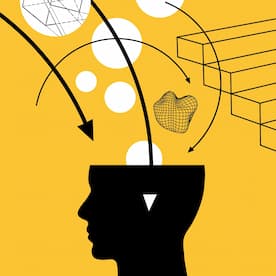
So much happens in our brain when we are viewing the symbols that are in front of us. So the brain is, is three parts. We have the neocortex, which is very much about will and awareness and the construction of poetry and language and music. We have the reptilian brain, which is responsible for all of our involuntary behavior. And then the limbic brain is the brain that we share with all mammals, that is the seed of our connection. And the limbic brain is really the part of the brain that lights up when we are confronted with all of the visual imagery of the world.
Interestingly, we see brands in a very ordered way. First and foremost, we see color. Then we see shape. Then we see numbers. And then, if we’re still paying attention, and that’s quite a big if these days, and we can read the language, then we’ll look at and try and comprehend words.
So that in and of itself is, is quite an arduous feat. We also have the ability to see a lot more than we actually can comprehend. So we could see about 10 million bits of imagery at once, but we can’t comprehend that much. We can only comprehend about 40 things at once. And so what happens when we’re in a supermarket, say, we have to, in order to be able to see something new, in order to be able to be intrigued by some exciting new thing that a corporation is offering, is they have to be able to break through existing patterns of recognition in order to be able to capture the imagination of someone that doesn’t even know that they should be looking for something new. So it’s quite a conundrum and, and again, quite an arduous path to get someone to actually notice something new and be interested in it. For existing brands that have a long history and legacy and relationship with consumers, you’re always straddling a continuum that really starts with recognition and ends with surprise. And you have to be able to straddle that continuum in a way that allows you to still be recognizable, to still have hints of that equity, to still have ties to what has grown in the consciousness of the consumer, but just enough evolution to be able to surprise and excite somebody with something new that they might be seeing that is adding to the existing equity of that brand.