Make Room in the Budget for Big, Audacious Ideas
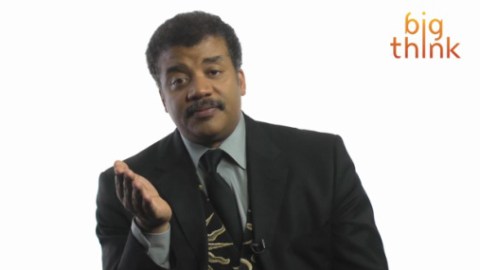
Snapshot: In the video below, astrophysicist Neil deGrasse Tyson argues that we need to break out of our “A-to-B thinking” in order to bring big, audacious ideas into existence.
***
In an effort to foster transparency and participation, the White House launched its We the People petition site in 2011 that allows netizens to engage the government on issues that matter to them.
Perhaps not surprisingly, the White House site has attracted a steady flow of petitions from the fringe, advocating everything from the deportation of Piers Morgan to the minting of a platinum trillion dollar coin to, more recently, the construction of a functioning Death Star to stimulate the economy.
Was this last petition an example of pure geekery or a protest in the form of a parody about wasteful government spending? Or both?
Whatever the petitioners’ intentions may have been, they reached the requisite 25,000 signatures (the threshold has since been raised to 100,000), and the White House was compelled to respond. In his official statement, Science and Space Budget Chief Paul Shawcross threaded clever Star Wars references throughout:
What’s the Big Idea?
All parodying aside, let’s not throw the baby out with the Death Star bathwater just yet. As the petition reads, “By focusing our defense resources into a space-superiority platform and weapon system such as a Death Star, the government can spur job creation in the fields of construction, engineering, space exploration, and more, and strengthen our national defense.”
If you remove the words “a weapon system such as a Death Star” from this sentence and insert “fully fund NASA,” you could achieved the same outcome of spurring innovation and economic growth, with considerable savings. You would also gain the endorsement of many prominent innovation experts, including Neil deGrasse Tyson, an astrophysicist and author of Space Chronicles: Facing the Ultimate Frontier.
In an interview with Big Think, Tyson tells us that people often point to space programs as prime examples of government waste. However, this is simply not accurate on two accounts, according to Tyson. For one thing, investments in space represent a tiny fraction of our budget. These programs also deliver a return on investment that is unparalleled. The problem, however, is that many people — including politicians — tend to use what Tyson calls A-to-B thinking. Politicians are used to fixing problems one-by-one. In fact, they are incentivized to think and operate this way due to election cycles and economic cycles.
However, as Tyson recently told Forbes:
It takes more than a few steps of reasoning to see how NASA influences a culture and how that culture innovates, creates the economies of tomorrow, stabilizes and then grows your economy. That’s a multi-step exercise that certainly economists understand easily. To writers for Forbes, it’s self-evident. But everybody else, apparently not.
Tyson argues in the video below that we need to break out of this A-to-B thinking in order to bring big, audacious ideas into existence.
Watch here: