Overconfidence often affects the most skilled individuals, making it crucial to remain humble, seek feedback, avoid complacency, stay curious, and continually challenge oneself, as illustrated by Sherlock Holmes’ reliance on Watson, as discussed by Maria Konnikova in her lesson.

In this lesson, Maria Konnikova teaches you to emulate Sherlock Holmes by mastering deduction through careful observation, precise reasoning, and logical decision-making, while distinguishing between the improbable and impossible and focusing on objective facts.
Maria Konnikova, in her lesson on improving observation skills inspired by Sherlock Holmes, emphasizes the importance of focused attention, selective engagement of the senses, and understanding personal biases to enhance one’s powers of observation.
In her lesson, Maria Konnikova illustrates how adopting a scientist’s mindset, as exemplified by Sherlock Holmes, can help everyone, regardless of their background, approach problem-solving more rationally by identifying research questions, designing methods, and re-evaluating their strategies.
Alan Alda emphasizes the importance of stepping out of your comfort zone to discover valuable insights, while Natalie Nixon advocates for treating intuition as vital qualitative data that enhances decision-making and embodied leadership by tuning into bodily sensations.
Natalie Nixon emphasizes the importance of questioning for creativity, advocating for a blend of divergent, convergent, and hybrid questions while embracing ambiguity to foster collaboration and innovation within teams.
Natalie Nixon emphasizes that nurturing creativity—defined as the ability to balance wonder and rigor—is essential for individuals and organizations to thrive in the 4th Industrial Revolution, where automation and AI are prevalent, and introduces the 3i Creativity Model to foster this skill.
In this class, Natalie Nixon, founder of Figure 8 Thinking, explores her 3i Creativity Model, a framework designed to enhance individual creativity and drive organizational innovation for greater relevance and success.
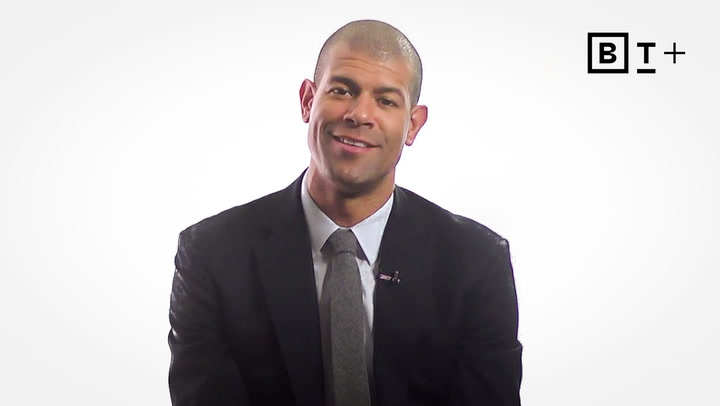
Sabermetrics has transformed sports analytics, exemplified by Shane Battier’s use of data to exploit Kobe Bryant’s weaknesses, highlighting the importance of data-driven decision-making to identify and capitalize on competitors’ vulnerabilities while balancing intuition and qualitative assessments.
Behavioral economists Daniel Kahneman and Amos Tversky won the Nobel Prize for mapping the human mind’s irrational decision-making biases, and now, with insights from Julia Galef of the Center for Applied Rationality, we can learn to avoid these pitfalls.
Politeness and pushiness are simple, but recognizing diverse communication styles—termed “relational intelligence” by Angie McArthur, CEO of Professional Thinking Partners—is challenging yet essential for reducing misunderstandings in the workplace.
Incorporating critical thinking into the idea development process is essential, as demonstrated by Samsung’s hasty Galaxy Note 7 launch, which prioritized speed over safety, resulting in a flawed product and costly recall.
The “pertinent negative” concept, explained by art historian Amy Herman, emphasizes the importance of recognizing absent symptoms alongside present ones to enhance observation and articulation skills, which are vital for success in the 21st century.
Art historian Amy Herman’s video lesson on “visual intelligence” emphasizes the Four A’s—assess, analyze, articulate, and adapt—as essential skills for improving situational awareness in both work and life through dedicated practice.
Ferris Bueller’s advice to pause and observe life is more relevant than ever in our fast-paced digital age, where Amy Herman emphasizes the importance of not only reflection but also enhancing our perception skills.
Lisa Bodell, CEO of FutureThink, emphasizes overcoming inertia in change management through “Little Bigs”—small exercises that encourage innovative thinking and behavior shifts, such as brainstorming risky ideas, involving outsiders in problem-solving, and empowering team members to make independent decisions.
Lisa Bodell, Founder and CEO of FutureThink, emphasizes that the key to innovation lies not in access to information but in improving our questioning skills, advocating for provocative thought experiments to elicit meaningful insights.
Lisa Bodell, Founder and CEO of FutureThink, discusses her “Kill a Simple Rule” exercise, which empowers teams to challenge existing rules and foster innovative cultures by allowing them to change two rules while identifying non-negotiable ones.
To make better decisions, embrace probabilistic thinking by evaluating multiple future possibilities and outcomes, balancing your focus on both successes and failures to develop a more accurate understanding of potential results.
Ram Dass’s insight on silence resonates with Andrew Bustamante’s emphasis on strategic secrecy in leadership, highlighting how withholding information can enhance team focus and motivation while safeguarding valuable insights for greater impact.
In this video lesson, former CIA operative Andrew Bustamante reveals how to move beyond small talk to uncover deeper insights through “elicitation,” a technique that uses open-ended questions to encourage others to share their thoughts and motivations naturally.
Philosopher Daniel Dennett warns against treating AI as rational agents, emphasizing the importance of recognizing their limitations and the potential for misinformation, urging users to design prompts that seek actual truth rather than accepting misleading outputs.
Philosopher Daniel Dennett explores the value of questioning in gaining wisdom, emphasizing the importance of collaborative inquiry and the need to challenge assumptions through dialogue, while also addressing when to question alone or provide answers.
Analogies can effectively clarify complex ideas by drawing comparisons, but philosopher Daniel Dennett warns they can also mislead; thus, it’s essential to test their validity, acknowledge critical differences, and refine them through discussion with others.
Philosopher Daniel Dennett offers two heuristics for evaluating arguments: simplify your own by removing unnecessary details, and be cautious of complex arguments that may overlook key facts, especially in unfamiliar topics like conspiracy theories.
Philosopher Daniel Dennett offers critical thinking strategies to help navigate persuasive arguments, emphasizing the importance of questioning intuition pumps and being wary of manipulative language, particularly when encountering the word “surely.”
Philosopher Daniel Dennett argues that philosophy should intersect with science and address life’s deepest questions, valuing critical debate as essential for uncovering truth, and applies this analysis to AI, urging careful consideration of its perceived truthfulness to maximize its benefits.
Philosopher Daniel Dennett offers time-tested techniques from philosophy and cognitive science to help navigate modern challenges like “fake news” and AI, emphasizing the importance of inquiry and critical thinking in uncovering the truth.
In fast-paced business settings, Professor Alex Edmans advises on critically evaluating preliminary research findings to avoid misinformation, emphasizing the importance of author credentials and the scientific consensus over individual studies.
In a lesson inspired by The Wizard of Oz, Professor Alex Edmans emphasizes the importance of critically evaluating authors’ expertise and potential biases to uncover their true intentions and credibility in research.