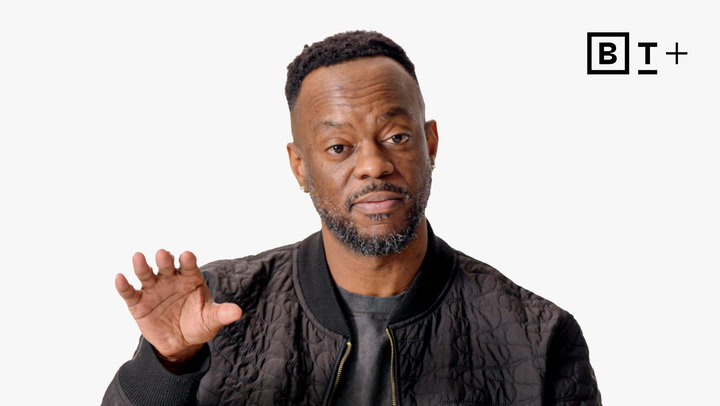
AI is revolutionizing video production by enhancing creativity and efficiency, enabling creators to generate animations, special effects, and B-roll footage, while maintaining control over their projects, as demonstrated by AI storyteller Willonius Hatcher in this video lesson.
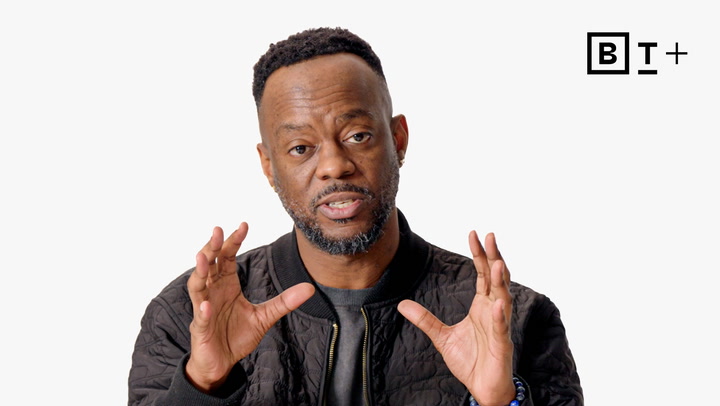
AI storyteller Willonius Hatcher emphasizes the importance of precise prompts in generating impactful visuals with AI, offering guidance on defining subjects and settings while suggesting parameters to create professional images for various business applications.
In early 2024, AI storyteller Willonious Hatcher created the viral hit “BBL Drizzy” by skillfully collaborating with AI, emphasizing the importance of defining purpose, refining sound, perfecting lyrics, and iterating, which he outlines in a video lesson on producing high-quality audio.
Generative AI acts as a tireless writing assistant, helping you draft and refine various texts—like business plans and ads—by following a simple three-step process: defining your goals, assigning a persona, and iterating on the output to suit your needs.
AI can enhance creativity by helping you achieve your goals faster, but success depends on effectively framing your prompts, defining your purpose, setting clear parameters, and iterating on the output, as explained by AI storyteller Willonius Hatcher.
A mindset of curiosity and resilience is crucial for success with AI, as embracing mistakes and continuously learning can unlock its full potential, leading to innovative breakthroughs and improved outcomes.
Mastering AI, like getting fit, requires consistent effort, discipline, and a commitment to learning, as emphasized by AI storyteller Willonius Hatcher, who advocates for making AI a regular part of your workflow to stay competitive in this rapidly evolving field.
AI can enhance your creative process by acting as a collaborative tool that saves time and resources, allowing you to focus on your core work while producing high-quality outputs like 3D animations, scripts, and pitch decks more efficiently.
In this video lesson, AI storyteller Willonius Hatcher highlights how AI, already influencing our lives, can empower everyday people to work more efficiently, amidst the hype and fear surrounding its rapid evolution.
To become an effective AI leader, you must actively integrate AI into daily operations, experiment with new models, and foster curiosity among your team, as basic literacy alone is insufficient for staying relevant in today’s rapidly evolving landscape.
Professor Michael Watkins emphasizes that while AI can drive business value, leaders must prioritize ethical oversight, employee empathy, and proactive measures to mitigate risks like bias and job displacement in an AI-driven workplace.
As generative AI transforms society, leaders must model responsible use by fostering collaboration, setting realistic guidelines, encouraging exploration, creating a cooperative culture, ensuring data privacy, and demonstrating effective AI practices to guide their teams.
As generative AI evolves, ethical concerns about bias, privacy, and copyright arise, prompting the need for awareness and responsible usage, as discussed by Professor Ethan Mollick in his video lesson on navigating these challenges in professional contexts.
Generative AI can enhance learning by providing context-rich explanations, examples, and feedback, similar to effective teaching methods, as demonstrated by Professor Ethan Mollick in his video lesson on utilizing AI as a tutor.
In this video lesson, Professor Ethan Mollick discusses how incorporating AI as a brainstorming partner can enhance creativity by generating unconventional ideas, encouraging high-variance thinking, and ultimately revolutionizing the innovation process.
In this video lesson, Professor Ethan Mollick discusses navigating the unpredictable nature of large language models, emphasizing the importance of understanding their limitations, managing potential misinformation, and continuously updating one’s knowledge of AI’s evolving capabilities.
In a video lesson, Professor Ethan Mollick emphasizes that providing clear, step-by-step instructions and engaging interactively with AI can significantly improve its output quality, akin to training an intern, while also advising on the strategic timing of AI consultation.
In late 2022, ChatGPT popularized “generative artificial intelligence,” which encompasses large language models capable of producing diverse outputs, prompting Professor Ethan Mollick to explore their implications and how we can effectively coexist and thrive with this transformative technology.
As generative AI sparks diverse opinions on its implications for humanity, Ethan Mollick suggests we shift our focus to understanding AI’s capabilities and potential applications, emphasizing experimentation to enhance our skills and foster a responsible partnership with technology.
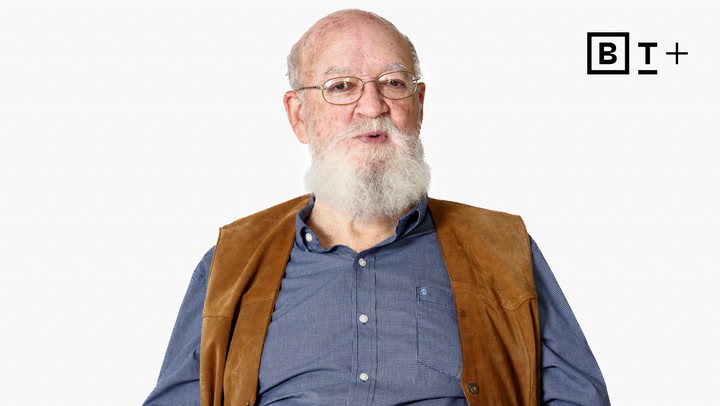
Philosopher Daniel Dennett warns against treating AI as rational agents, emphasizing the importance of recognizing their limitations and the potential for misinformation, urging users to design prompts that seek actual truth rather than accepting misleading outputs.
Cal Newport emphasizes the importance of setting clear boundaries for hybrid and remote teams, suggesting synchronized schedules, designated workspaces, and simulated commutes to enhance efficiency and well-being.
Professor Michael Watkins emphasizes that instead of being overwhelmed by AI, professionals should actively engage with it to enhance strategic thinking, problem-solving, and career advancement by challenging AI to produce smarter, more creative solutions.
Businesses must recognize their profound responsibilities to society when engaging with AI, as its influence on privacy and decision-making can reshape industries and everyday life, necessitating a comprehensive understanding of various fields to anticipate potential consequences.
Professor Yuval Harari discusses how AI’s relentless, “always-on” nature contrasts with human needs for rest, potentially disrupting our daily rhythms, privacy, and decision-making processes as power shifts from humans to machines.
Entrepreneur Gary Vaynerchuk encourages leaders to adopt a “maybe” mindset towards emerging technologies, as this openness fosters growth and adaptability, while defaulting to “no” can hinder progress and allow competitors to take the lead.
David Epstein argues that while automation is transforming the job market, workers can thrive by developing soft skills and adapting to “wicked” learning environments where human strengths complement the limitations of robots and computers.