
Skip to content


AI is revolutionizing video production by enhancing creativity and efficiency, enabling creators to generate animations, special effects, and B-roll footage, while maintaining control over their projects, as demonstrated by AI storyteller Willonius Hatcher in this video lesson.
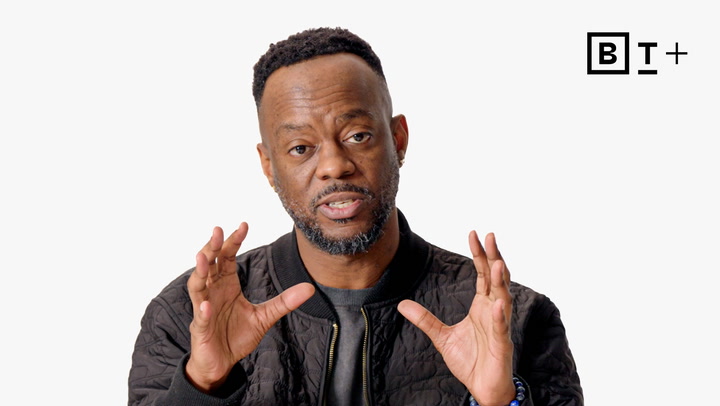
AI storyteller Willonius Hatcher emphasizes the importance of precise prompts in generating impactful visuals with AI, offering guidance on defining subjects and settings while suggesting parameters to create professional images for various business applications.
In early 2024, AI storyteller Willonious Hatcher created the viral hit “BBL Drizzy” by skillfully collaborating with AI, emphasizing the importance of defining purpose, refining sound, perfecting lyrics, and iterating, which he outlines in a video lesson on producing high-quality audio.
Generative AI acts as a tireless writing assistant, helping you draft and refine various texts—like business plans and ads—by following a simple three-step process: defining your goals, assigning a persona, and iterating on the output to suit your needs.
AI can enhance creativity by helping you achieve your goals faster, but success depends on effectively framing your prompts, defining your purpose, setting clear parameters, and iterating on the output, as explained by AI storyteller Willonius Hatcher.
A mindset of curiosity and resilience is crucial for success with AI, as embracing mistakes and continuously learning can unlock its full potential, leading to innovative breakthroughs and improved outcomes.
Mastering AI, like getting fit, requires consistent effort, discipline, and a commitment to learning, as emphasized by AI storyteller Willonius Hatcher, who advocates for making AI a regular part of your workflow to stay competitive in this rapidly evolving field.
AI can enhance your creative process by acting as a collaborative tool that saves time and resources, allowing you to focus on your core work while producing high-quality outputs like 3D animations, scripts, and pitch decks more efficiently.
In this video lesson, AI storyteller Willonius Hatcher highlights how AI, already influencing our lives, can empower everyday people to work more efficiently, amidst the hype and fear surrounding its rapid evolution.
“King” Willonius Hatcher, a comedian and AI storyteller, asserts that the AI revolution empowers creators to rapidly transform ideas into comprehensive projects—like pitch decks and marketing campaigns—allowing them to enhance their creative output while focusing on their core talents.
Difficult conversations challenge leaders, but AI can serve as a rehearsal tool for practicing these discussions safely and effectively, helping to identify potential pitfalls while ensuring the chosen AI minimizes unhelpful biases, as advised by executive coach Kim Scott.
Hybrid meetings often lead to awkward moments and deeper challenges regarding participation and inclusion, as remote workers may feel disrespected yet safer at home; executive coach Kim Scott offers strategies to foster inviting collaboration and equal participation for all team members.
To become an effective AI leader, you must actively integrate AI into daily operations, experiment with new models, and foster curiosity among your team, as basic literacy alone is insufficient for staying relevant in today’s rapidly evolving landscape.
Professor Michael Watkins emphasizes that while AI can drive business value, leaders must prioritize ethical oversight, employee empathy, and proactive measures to mitigate risks like bias and job displacement in an AI-driven workplace.
Professor Michael Watkins highlights the paradox of AI’s confident yet often incorrect responses, urging users to treat its outputs as starting points and to be aware of three blind spots: hallucinations, over-helpfulness, and over-optimism, which can skew critical thinking and accuracy.
In this video lesson, Professor Michael Watkins outlines three effective strategies for enhancing AI interactions: define a role for the AI, provide precise starting points, and use a series of focused prompts to guide the conversation toward useful outcomes.
AI is a powerful collaborator that requires human oversight, clear roles, and governance to ensure responsible use; Professor Michael Watkins outlines five principles for designing effective human-AI hybrid systems that adapt and improve while maintaining ethical standards.
AI has quietly evolved over decades, transitioning from background tasks to advanced capabilities like content creation and decision-making, and understanding its progression is crucial for adapting to the new workplace dynamics it is shaping, as explored by Professor Michael Watkins in this video lesson.

In a video lesson, Professor Michael Watkins highlights the rapid evolution of AI technology and its transformative impact on industries, emphasizing the importance of actively engaging with these changes for improved outcomes and leadership.
Michael Watkins likens today’s AI moment to choosing between being a dinosaur facing extinction or a surfer embracing change, inviting you to join a class that enhances your skills in crafting prompts, designing human-AI systems, and inspiring others to adapt.
To effectively develop and scale ideas in a digital world, leaders should shift from “my idea” to “the idea” thinking by creating collaborative virtual spaces for sharing and discussing projects, thereby distributing ownership and empowering their workforce.
Remote teams can be as effective as in-office ones when managed well, offering unique benefits that include improved communication, trust, and agility, but require intentional strategies to overcome physical, operational, and affinity distances.
Despite misconceptions about virtual teams’ productivity, effective management can bridge interpersonal gaps through improved communication, reduced inefficiencies, and a focus on trust-building, ultimately enabling organizations to hire top talent while minimizing biases.
Erica Dhawan outlines five traits—curiosity, combination, courage, community, and combustion—that enhance connectional intelligence (CxQ) to foster innovation, illustrated by Colgate-Palmolive’s successful problem-solving approach with a new fluoride toothpaste.
In her critique of Malcolm Gladwell’s “The Tipping Point,” Erica Dhawan argues that today’s social trends no longer rely on a few well-connected individuals, emphasizing the importance of Connectional Intelligence (CxQ) in leveraging diverse networks and relationships to drive value and innovation.
In a video lesson, Neil Irwin emphasizes that while data is the 21st century’s currency, mastering its interpretation and application can enhance both individual and organizational success, urging professionals to leverage data wisely for career development.
Effective communication often falters due to misunderstandings of intellectual diversity, but by recognizing different attention triggers and adjusting your approach—such as using clear subject lines, summarizing key points, or asking guiding questions—you can transform potential breakdowns into breakthroughs.
In addressing issues like an ant infestation, it’s crucial to not only tackle the immediate problem but also investigate underlying causes, as political scientist Ian Bremmer suggests, to avoid being misled by recency and headline biases in understanding complex events.